Construction Curiosities #145
All about protecting your Builder’s Risk - What it covers and how to keep a claim from getting denied

Hey! What’s up?! Matt here.
Welcome back to another Construction Curiosities Newsletter.
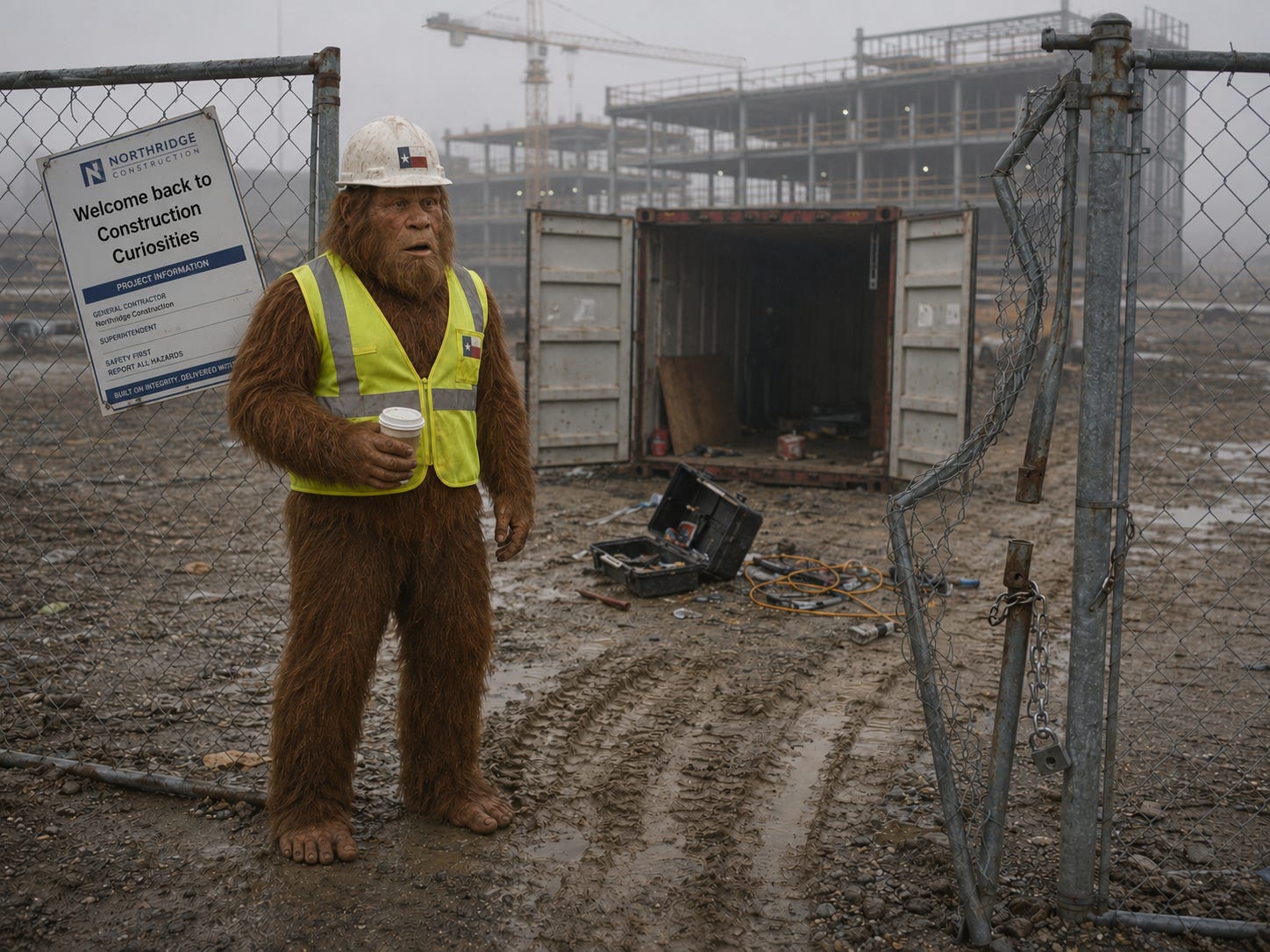
Connex doors wide open. Tools gone. Material gone. And somehow the only thing still hanging on that fence was a sign that ironically says “Welcome.”
Every GC has a story like this. This week’s Construction Curiosities is about what actually happens after the break-in, and why your builders risk policy is either going to save your project or become your company’s ruin.
Summary
This week we will look at:
One Musing: All about protecting your Builder’s Risk
ConTech Corner: Free AI for AEC Course
One Meme: Stretch & Flex in WW2?
One Musing
The Copper Walked Off. And So Did Your Coverage.
What builder’s risk really covers, the security your policy quietly requires, and how a theft turns into a denied claim.
Early Monday morning. Your super pulls up to the site, and the gate’s already open. Wide open. The temp power gear is stripped, 3 racks of copper pipe are gone, and the skid steer that was parked over by the CMU is now somebody else’s skid steer.
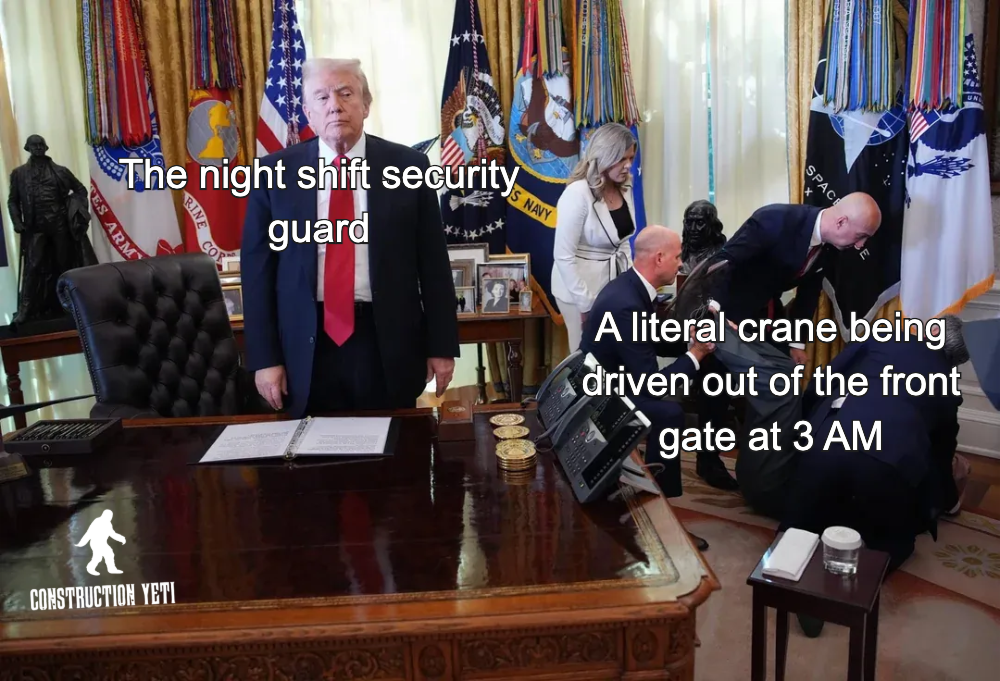
He files the builder’s risk claim that afternoon. Theft is a covered peril. What a headache, but its not his first rodeo.
Then the adjuster asks one question.
“Did the site have all the security requirements listed in the policy?”
He goes quiet... Because nobody read that part of the policy.
The National Equipment Register puts the value of construction equipment stolen every year somewhere between $300 million and $1 billion. Less than a 1/4 of it ever comes back. And that’s just the equipment. It doesn’t count the copper, the tools, the temp power, the fixtures staged install, or the weeks you lose replacing all of it.
Theft isn’t a rare event you insure against and forget. Your builder’s risk policy has a lot more to say about it than most people realize.
What Builder’s Risk Actually Is
Builder’s risk, also called course of construction insurance, is property coverage for a building while it’s still being built. It’s the policy that protects the project itself, plus the materials and equipment on site, from the day you break ground to the day the owner takes the keys.
Almost everyone with a financial stake has an interest in it: the owner, the GC, the subs, the lender, sometimes the architect. Who actually buys it depends on the contract. It’s spelled out in there, if anyone reads that far…. (RTFC!)
It covers the perils you’d expect on a jobsite: fire, lightning, hail, windstorm, explosions, vandalism, and yes, theft. It covers materials and equipment while they sit on site, and often while they’re in transit or staged off site. Good policies also cover soft costs, the loan interest, the lost rent, the real estate taxes, when a covered loss pushes your completion date.
It’s not everything. Standard builder’s risk usually excludes flood and earthquake, and on the coast it often carves out named windstorm, unless you buy the coverage back. It also excludes wear and tear, faulty workmanship, and employee theft. So the worker who “borrows” a generator for good isn’t a builder’s risk claim. The stranger who cuts your fence at 2 a.m. is.
Ohhh and it doesn’t cover you replacing all your valve stops in a hotel build when you install the wrong ones… (that’s a story for another day)
The Security Requirements Hiding in Your Policy
Most builder’s risk policies carry what’s called a protective safeguards endorsement. It’s a clause that says you don’t just get to sit back and collect a check when something goes wrong. You have to actively protect the site. If you don’t, the coverage for theft, fire, and vandalism can be suspended, or voided entirely.
The safeguards insurers commonly require read like a site security spec:
Fencing: complete perimeter fencing, gates closed and locked during nonworking hours.
Lighting: the entire site illuminated from sunset to sunrise.
Alarms: a burglar alarm connected to a central or monitored station.
Video surveillance: cameras covering the perimeter and the interior.
Guards: on some projects, a security service making rounds.
Locked storage: enclosed, locking metal containers for the valuable material.
That list isn’t just a set of best practices. On a lot of policies, it’s a condition of coverage.
This is not theoretical. On June 2, 2003, a fire destroyed a dormitory The Weitz Company was building at Arizona State University. Weitz carried a commercial builder’s risk policy from Liberty Insurance Underwriters. That policy came with three warranty endorsements. Keep fire extinguishers on site, inspect for hazards at the end of each day, and run a fire watch during welding and other hot work. Each one said the same thing in the fine print. Don’t comply, and coverage is void.
Liberty pointed at those warranties and refused to pay, arguing Weitz hadn’t kept the safeguards it promised to keep. The case went up to the Arizona Court of Appeals as Liberty Insurance Underwriters v. Weitz Co. The court held the warranties were enforceable and sided with the carrier.
Think about that. A covered peril, a policy in force, and the fight came down to whether a contractor honored a fire watch clause buried in an endorsement. Miss the safeguard your policy names, and you hand the carrier its argument. Read The F’n Policy… then actually do what it says.
The carriers who write these endorsements hardest tend to write them for smaller projects and smaller contractors. If you’re a national GC with a documented loss-prevention program, the underwriter already trusts your process. If you’re a growing sub or a smaller builder, the policy is going to spell out the fence and the lighting hours, and it’s going to mean it.
Does Security Actually Lower Your Premium?
This is the question everyone asks, and the honest answer is more useful than a yes.
Yes, security can help your premium. Underwriters price theft and vandalism risk based on how exposed the site is. A fenced, lit, alarmed, camera-covered site is a better risk than an open lot with a padlock, and some carriers will give you a credit for it. On a large or long-duration project, that credit is real money.
But the premium is the small lever. The big one is whether your claim gets paid at all.
Run the math. A monitored alarm or a camera system might cost you a few thousand dollars over the life of the job. A single stripped-copper-and-stolen-equipment loss runs into the tens of thousands before you count the schedule hit. And if you skipped the safeguard the policy required, that whole loss lands on you, not the carrier. Security doesn’t just shave the premium. It’s what keeps a covered peril from turning into a denied claim.
So the real financial case for site security isn’t the discount. It’s that the credit, the lower odds of a loss, and the validity of your claim all move the same direction at once. You’re not buying a break on the premium. You’re buying the right to actually use the policy you already paid for.
The Security Stack Worth Building
You don’t need a fortress. You need layers, and you need them to match what your policy asks for.
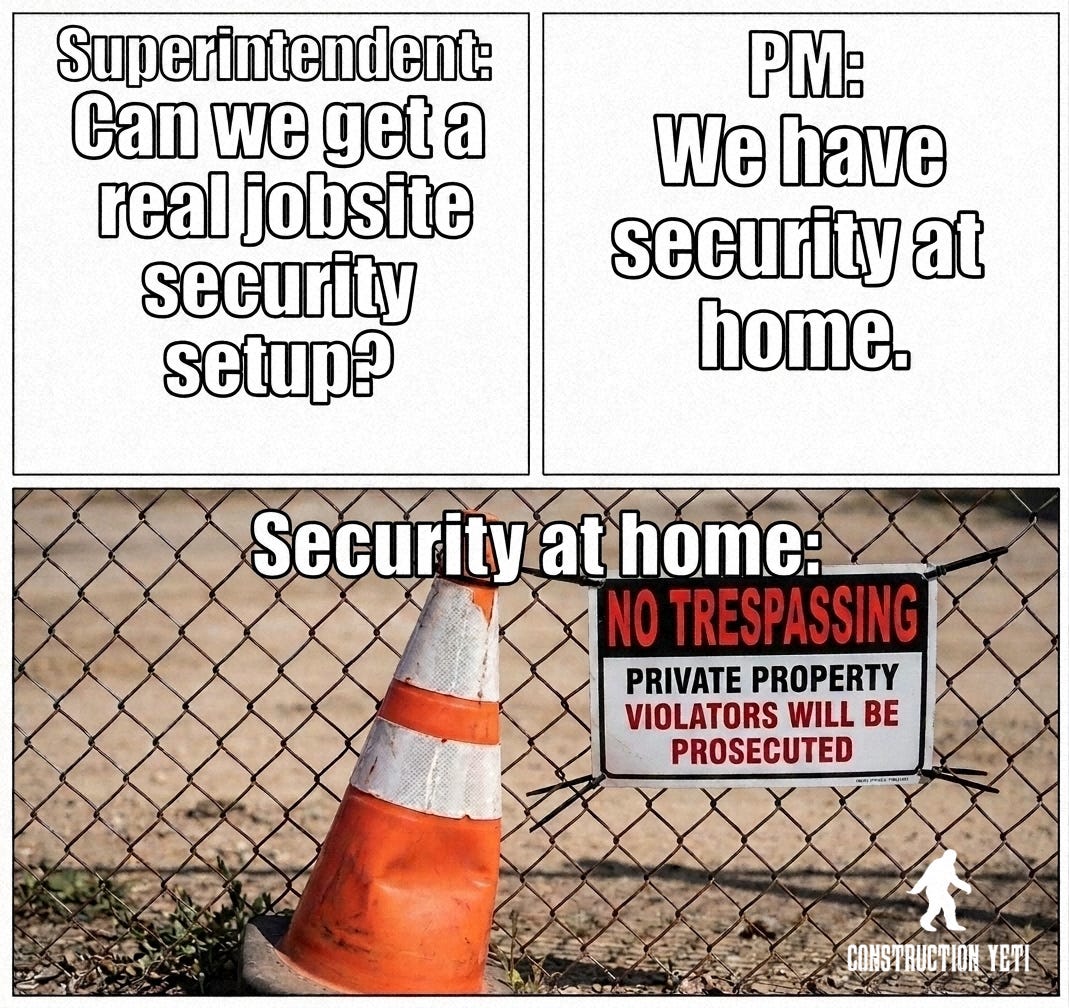
Here’s the stack:
Control the perimeter. Real fencing, gates locked during nonworking hours, and one controlled way in and out. Most theft is opportunity. Make it hard to just drive up to and keep the honest people honest.
Light it up. Sunset to sunrise. Lighting is cheap, it’s usually required anyway, and thieves hate visibility.
Lock up the valuables. Enclosed, locking conex boxes for copper, tools, fixtures, and anything small and expensive. Don’t leave the good stuff staged in the open over a long weekend.
Track the iron. GPS trackers and hidden tags on equipment. They won’t stop a theft, but helps push you into the less 1/4 of stolen equipment that actually gets recovered.
Alarm and monitor it. A monitored burglar alarm is on almost every protective safeguards list for a reason. Get one that reports to a real central station, not just a siren nobody hears.
Time your deliveries. Just-in-time delivery of high-value material means less of it sitting on site overnight waiting to get stolen. The safest copper is the copper that hasn’t been delivered yet.
Put up cameras. This is the one measure that does the most jobs at once, so it gets its own section below.
Use your people. A crew focused on security that closes the gate, puts up their tools, and locks the conex is worth more than any single device. Security is a habit before it’s a product.
Why Cameras Do the Most Work (and This Month’s Livestream ConTech Demo)
Of everything on that list, cameras are the one measure that checks the most boxes at once. A good camera visually deters the person casing your site, has after-hours live monitoring, hands you the footage the adjuster and police want, and satisfies the video-surveillance safeguard your policy may require. Deterrent, monitoring, evidence, and compliance in one device.
This month’s livestream demo is TrueLook Construction Cameras, so it’s a useful one to hold up against what insurers actually ask for. TrueLook built its name on three things one camera does at once: live viewing of the site from any device, automatic time-lapse of the whole build, and security. The live view and time-lapse are what a PM loves. The security is the part the policy cares about.
Their security tier, TrueShield, is built around the same checklist underwriters and monitored policies look for. TrueLook publishes its own version of that checklist, and it lines up with what the insurance side has been requiring for years. Here’s how the features map to it:
It has to see in the dark. Infrared cameras and clear night vision, because nearly every theft worth insuring against happens after the crew goes home.
It has to run when the power doesn’t. Battery backup, plus solar and built-in cellular options for sites with no permanent power or hardwired internet yet.
It has to do more than record. Motion detection, a blue light that pulses around the clock, strobe lights, and a siren. Plus a talkdown function, so a live person can tell an intruder to leave before anything walks off.
Somebody has to be watching. A professional monitoring center whose operators verify the motion alert and escalate it, instead of a camera that quietly films your loss in 4K for you to watch back later.
It has to tell you when it goes blind. Critical-issue alerts for power loss, low battery, and other problems, so you know the coverage-required camera is actually up and running.
And the footage has to stick around. Recordings kept up to 90 days, with the option to save the clip that matters permanently. That saved clip is exactly what a claim runs on.
I’m not here to sell you a camera. I’m here to point out that “put up cameras” is the laziest line in every site-security article. It means nothing until the camera actually does what your policy and a real investigation require. When you watch the live virtual jobsite walkthrough later this month, check it against that checklist.

RSVP to this month’s Construction Yeti LiveStream Demo
Thursday, July 30 · Noon Central - Streaming on LinkedIn Live and the Construction Yeti YouTube channel.
See you there!
RSVP on LinkedIn: HERE
RSVP on YouTube: HERE
PS - Don’t want to wait until the 30th? Submit your plan or hop on a quick call and TrueLook will map it all out for you:
Recommended camera placement
Security blind spot analysis
AI & monitoring recommendations
Estimated camera count
Estimated investment
And since we’re friends, you get a Construction Yeti exclusive 10% discount when you do: Get Your 10% Discount
The Bottom Line
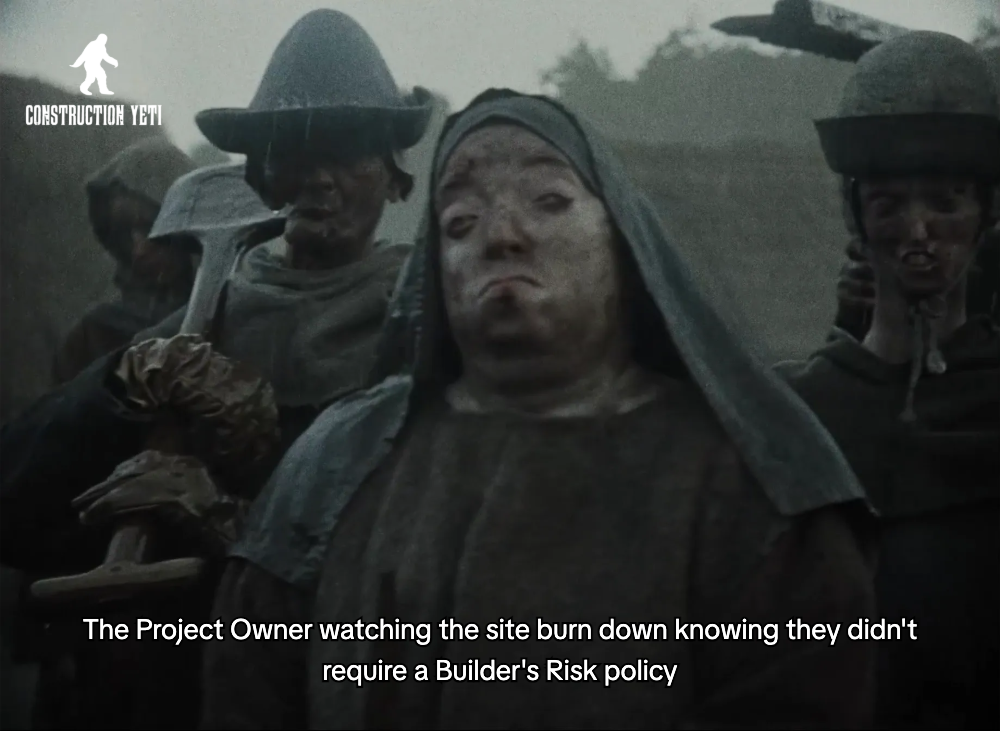
Builder’s risk isn’t a thing you buy and forget. It’s a contract with conditions, and most of those conditions are about how you secure the site.
The theft is going to be somebody’s problem. The only question is whose. A fence you actually lock, lights that actually run, and a camera that does its job put it on the carrier’s side of that line, not yours.
Read the policy. Build the stack. Keep the claim payable.
That’s a craft worth getting better at.
ConTech Corner
This week’s ConTech corner isn’t a tool but a free AI for AEC Course. My buddy Bhragan Paramanantham (author of Last Week in Contech) built and is the instructor for this course hosted by Kantiv (formally Joist AI).
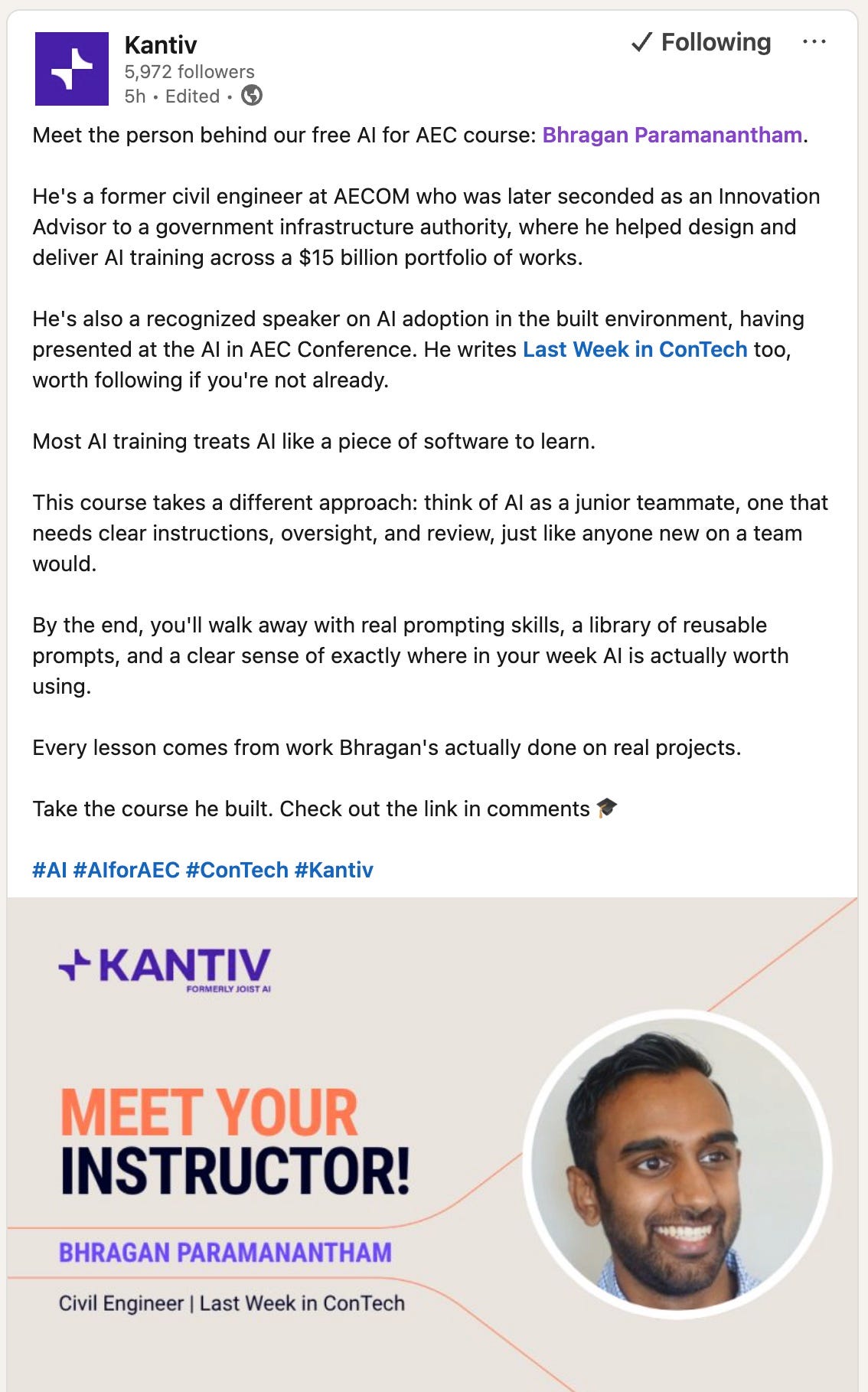
Check it out here:
https://www.kantiv.com/courses/course-ai-for-aec
One Meme
Construction Curiosities is a reader-supported Newsletter. Please consider upgrading your subscription to help support the work we are doing. With your support, we can keep providing entertaining yet educational Construction content!
See y’all next time! ✌