Construction Curiosities #144
We Didn't Discover America. We Built It.

Hey! What’s up?! Matt here.
Welcome back to another Construction Curiosities Newsletter.
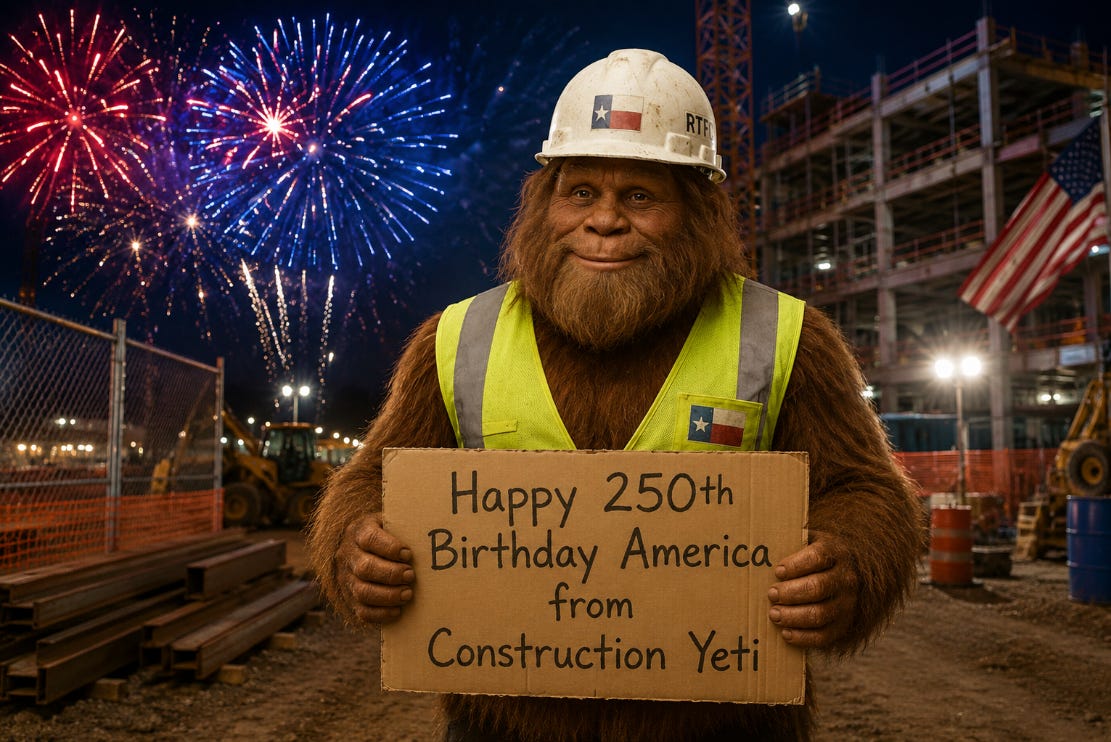
Happy 4th of July, everyone! Hope everyone had a safe one with all fingers still intact!
Summary
This week we will look at:
One Musing: We Didn't Discover America. We Built It.
ConTech Corner: 7 Blind Spots. 1 Real Jobsite.
One Meme: Construction workers on a long weekend.
One Musing
We Didn’t Discover America. We Built It.
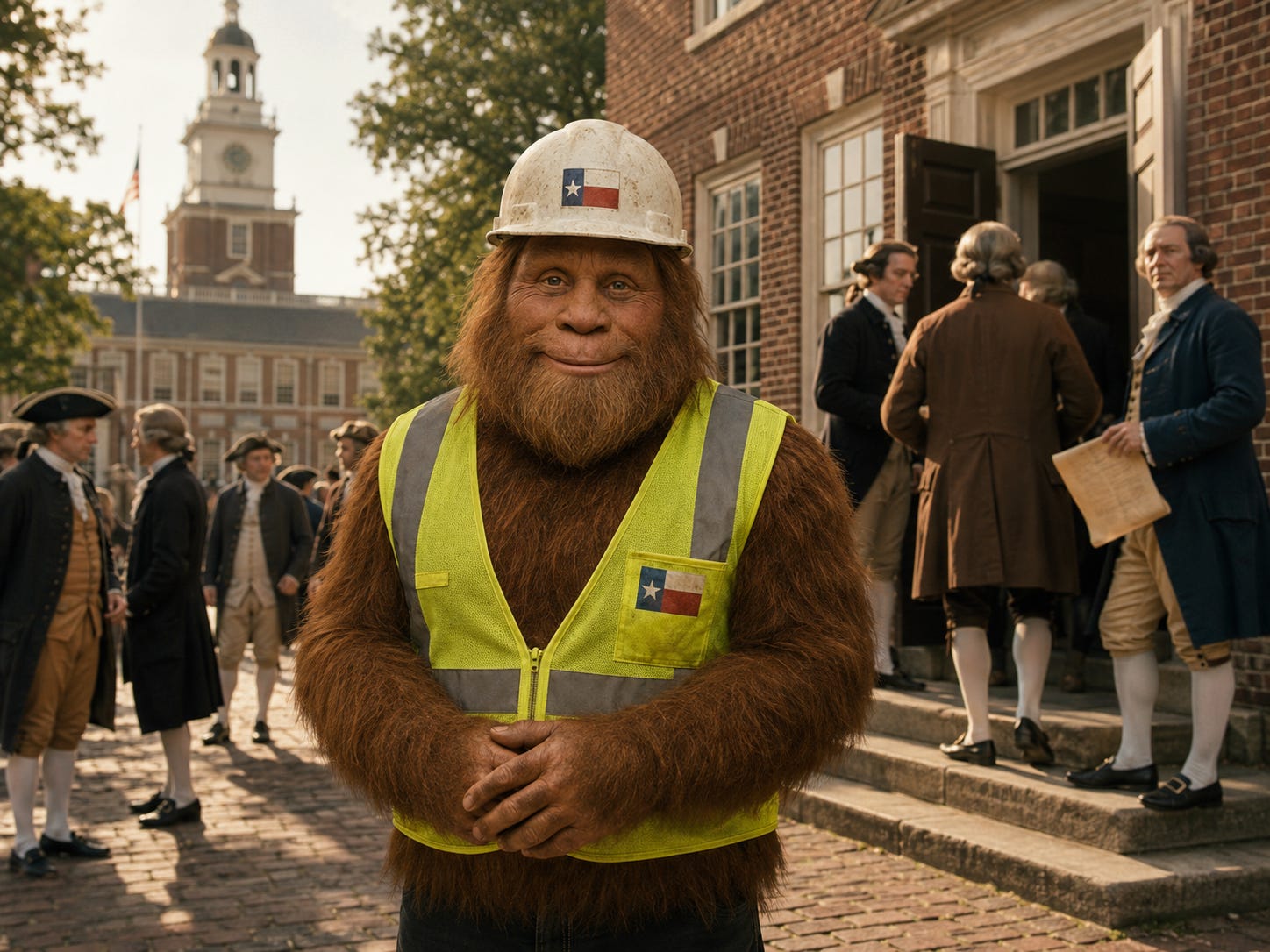
Every Fourth of July, we talk about the ideas, the philosophies of freedom. The Declaration, the signatures, the guys in wigs arguing in a hot room in Philadelphia.
We think about Christopher Columbus sailing the ocean blue. We think about Lewis & Clark trekking across the continent.
And that’s all super important. But what we don’t talk about is those who literally built this country’s infrastructure and how it ties into the American story.
Here’s a fact I like: construction on the Erie Canal broke ground on July 4, 1817. They picked Independence Day on purpose. Someone back then already understood that building the country and founding it were the same project.
So this year, instead of the usual history, I want to walk through the version of the American story that gets skipped. The one told in dirt, stone, steel, and concrete. Because the United States wasn’t handed to us finished. It was constructed. Often by men whose names never made it into the textbook.
Nobody wanted the ditch
Start with that canal. In 1817, the idea of digging a 363-mile channel across New York to connect the Hudson to Lake Erie was considered borderline insane. Critics called it “Clinton’s Ditch” after the governor who pushed it. There was no engineering school in the country to design it. The men who built it learned on the job.
Eight years and seven million dollars later, it worked. Shipping a ton of goods from Buffalo to New York City dropped from around $100 to roughly $6. That single number is why New York became the financial capital of the country instead of Boston or Philadelphia. A ditch nobody wanted rerouted the entire economy.
That’s the pattern for everything that follows. The big leaps forward weren’t the ideas. They were the builds.
The men who actually laid the track
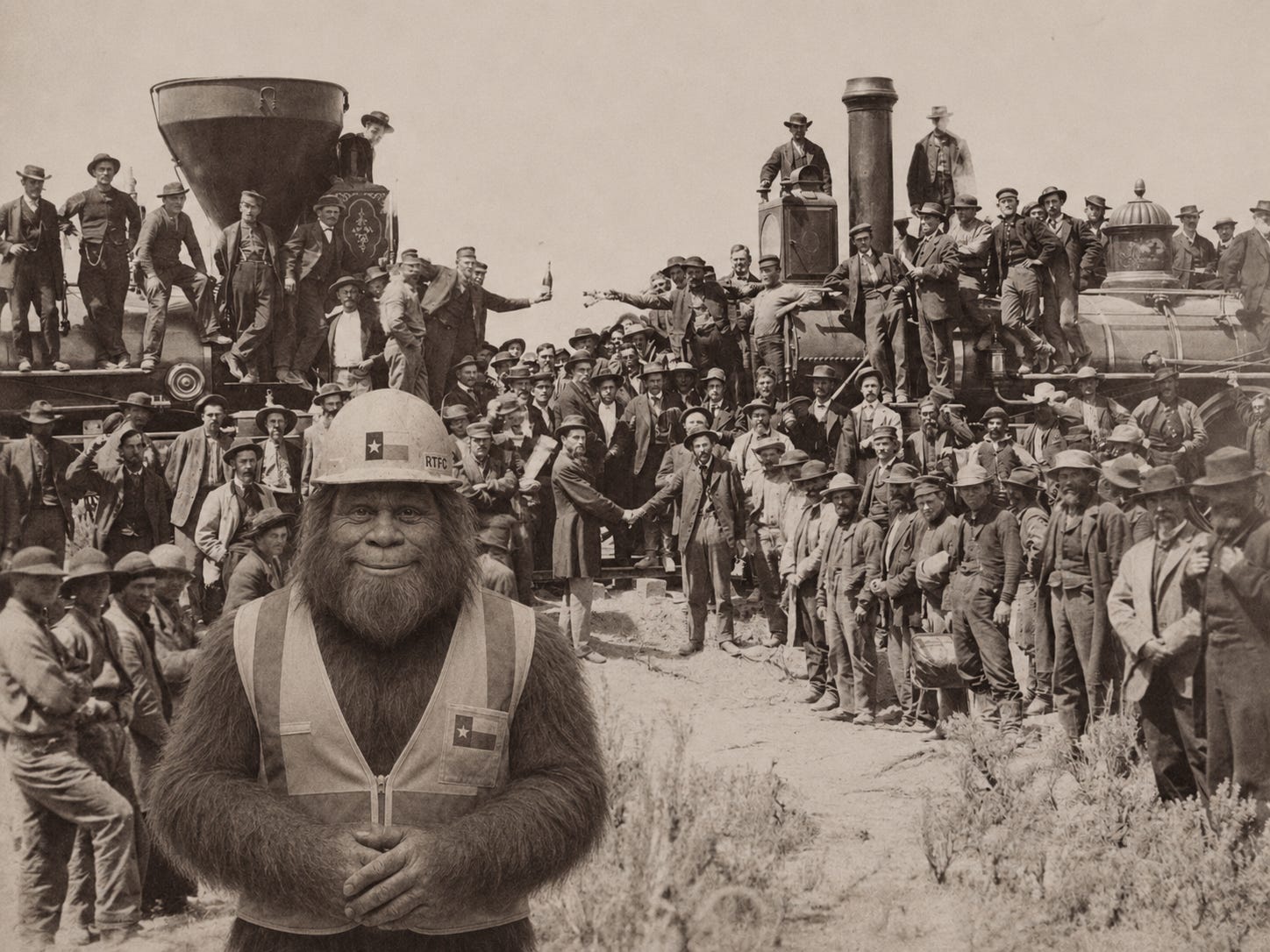
Fast forward to the transcontinental railroad. When the golden spike went into the ground at Promontory Summit on May 10, 1869, the two railroads had covered nearly 1,800 miles of track between them and stitched the coasts together.
But look at who did it. The Central Pacific hired around 15,000 laborers to blast through the Sierra Nevada, and more than 13,000 of them were Chinese immigrants. They cut fifteen tunnels through solid granite, including one that ran over 1,600 feet through pure rock, by hand.
At the ceremony, the railroad executives took turns swinging at the final spike and missed. A regular worker had to step in and drive it home. If that isn’t the most honest metaphor for this industry, I don’t know what is. The people with the suits and their names on the company drove up for the photo. The people with tools in their hands finished the job.
Then America learned to build up
Up to this point, the story runs sideways. Canals, rails, making long distances reachable. Then in 1885 in Chicago, a building changed the direction of the whole country. It went straight up.
The Home Insurance Building is generally credited as the first true skyscraper. Ten stories, which sounds like nothing now. What made it matter wasn’t the height, it was the method. William Le Baron Jenney hung the walls on an interior steel frame instead of stacking heavier and heavier masonry to hold the thing up. That one structural idea, the steel skeleton, is why cities across the globe have skylines. Before it, a building could only get so tall before the base had to be a fortress. After it, the sky was the only limit.
Everything you picture when you picture an American city comes out of that move. The Chrysler Building. The Flatiron. And the one that defined an industry: the Empire State Building. It broke ground on March 17, 1930, right as the economy was collapsing, and topped out 410 days later at a pace of roughly four and a half stories a week. Tallest building in the world, built in about thirteen months, in the worst economy the country had ever seen.
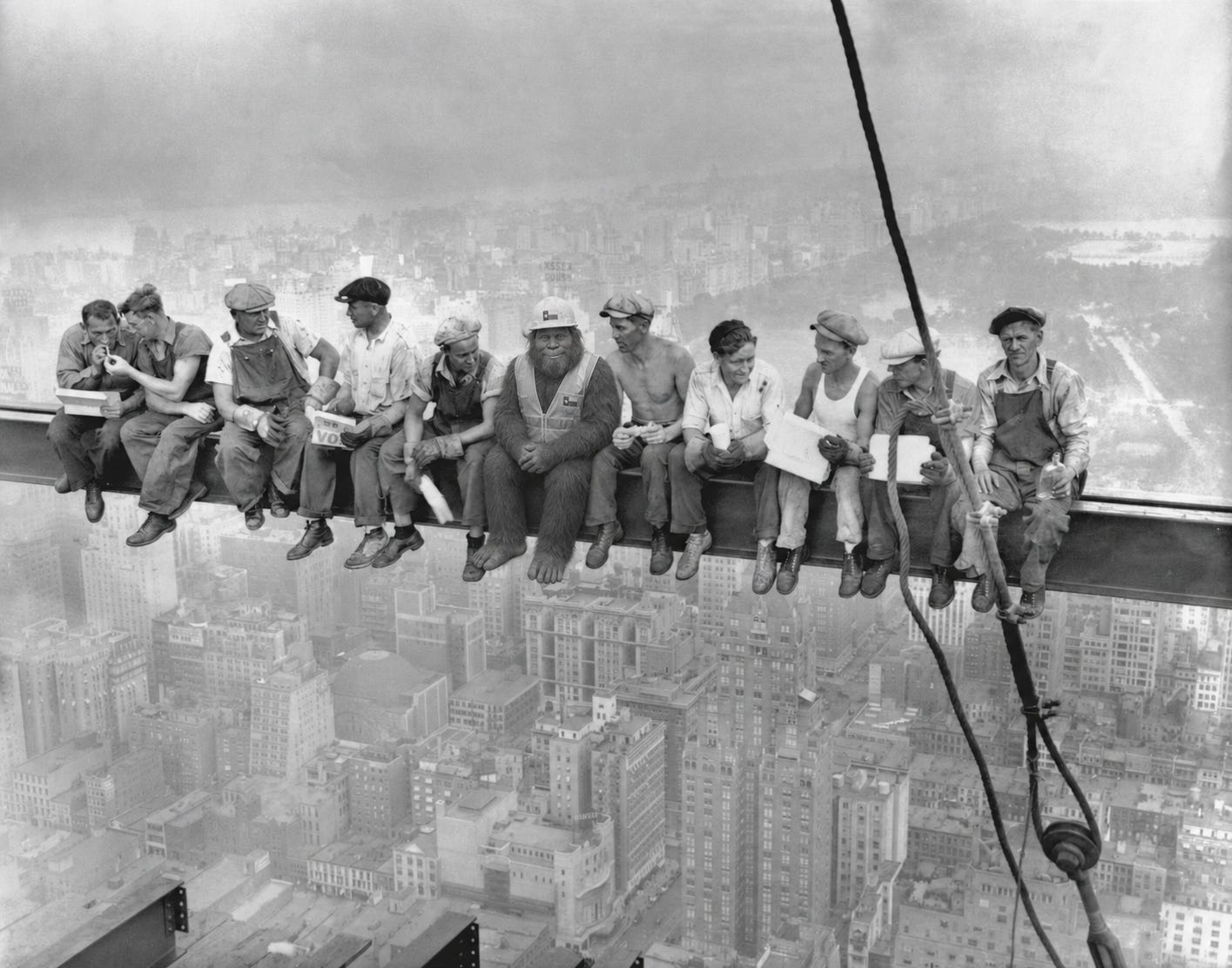
But steel frames don’t walk themselves into the sky. Somebody has to be up there. For over a century, a lot of those somebodies were Mohawk ironworkers, who became known across New York for walking narrow beams a quarter mile in the air without flinching. They worked the Empire State, the Chrysler, Rockefeller Center. That famous photo of eleven men eating lunch on a beam with their boots dangling over the city, taken 850 feet up during the construction of Rockefeller Center in 1932, is the whole industry in one frame. No harnesses. No net. Just guys on a beam, doing the job, while everyone below got the skyline.
That’s the part I never want to lose. The steel frame was the American invention. The ironworkers were the Americans who made it real, and most of them you’ll never be able to name.
Building through the worst possible timing
While Manhattan went vertical, the West went massive. The Hoover Dam went up between 1931 and 1936, dead in the middle of the Great Depression. Around 21,000 men worked it over the life of the job. They poured over three million cubic yards of concrete, and they did it in interlocking blocks because a single pour that size would have taken over a century to cool and would have cured wrong. Ninety-six people died on that site. The dam still holds back the Colorado River almost ninety years later.
It made development of the Southwest possible.
These weren’t just monuments. They were bets placed at the worst possible moment, and the reason they paid off is that the crews delivered.
The freeway you drove today
The most recent one is under your tires. On June 29, 1956, Eisenhower signed the Federal-Aid Highway Act, authorizing 41,000 miles of interstate. It was the largest public works project in American history to that point. Eisenhower wanted it partly because he’d seen the German autobahn during the war and driven a miserable Army convoy across the country’s dirt roads back in 1919.
You probably used a piece of it this weekend to get to your BBQ or will this summer on that family vacation. And you will not think about it once. That’s the highest compliment you can pay a build. When it works, it disappears. Nobody thanks the estimator who priced the interchange or the crew that graded it in August heat. The road just works, so it becomes invisible.
To those who actually built this Country
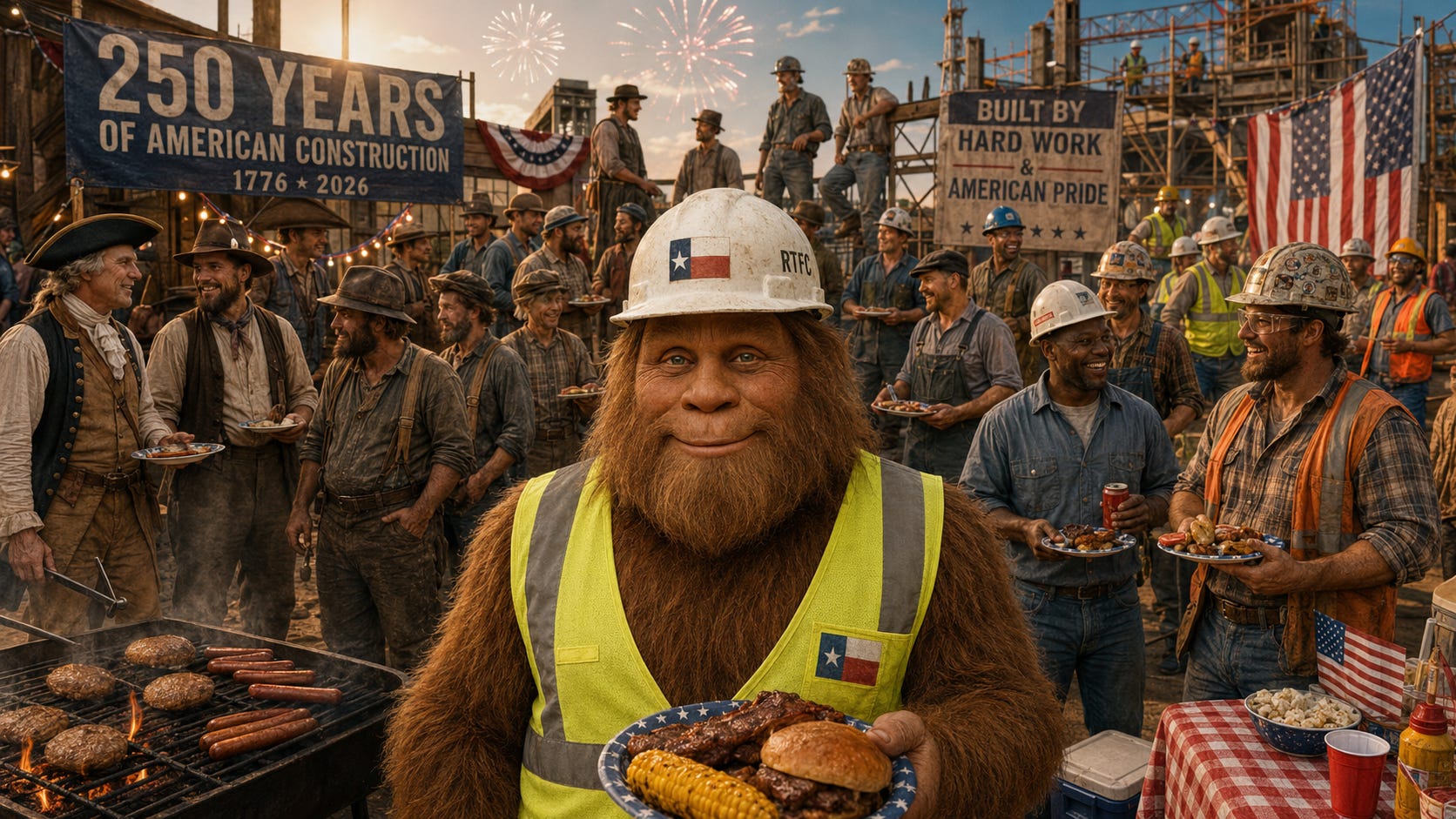
Every one of these projects has a famous name attached in the textbooks. Clinton. Stanford. Jenney. Eisenhower. And every one of them was actually built by people we’ll never name. The immigrant laborers in the Sierra tunnels. The Mohawk ironworkers on the high steel. The 96 who didn’t come home from the dam.
We remember the ribbon cuttings. We forget the blood, sweat, tears, RFIs, and the guys who solved the problem that wasn’t in the drawings.
This country is, quite literally, a construction project that never stopped. 250 years in and we’re still pouring, still framing, and still innovating to make this Country amazing.
Take a second and think about the generations before that quite literally paved the way and set the cornerstones of the Country. The Founding Fathers wrote the country down on paper. The trades are the ones who made it real.
ConTech Corner
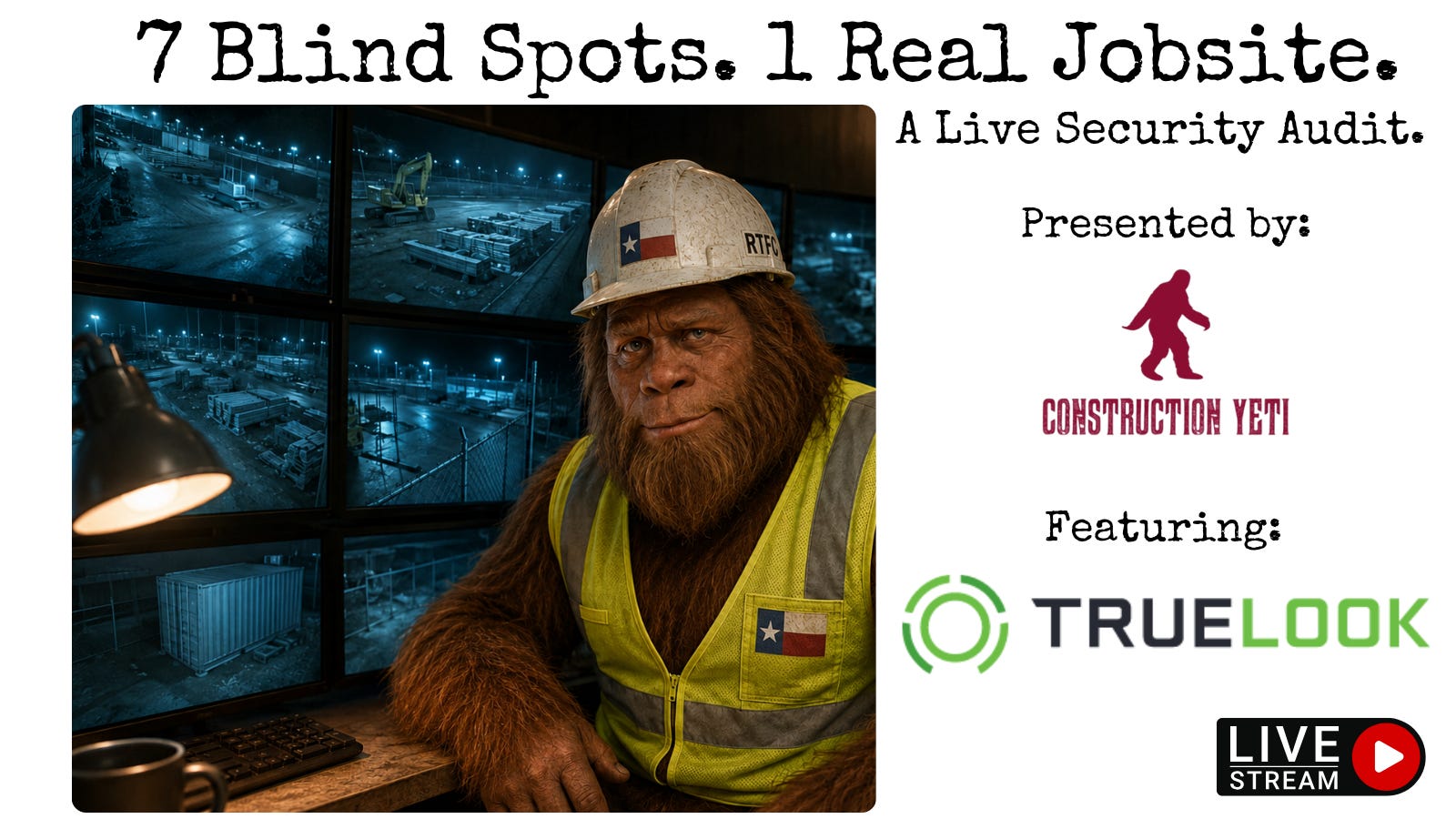
Can you spot all 7 security blind spots on a real jobsite before I do?
That’s the challenge I’m putting to Scott Dowd, Solutions Engineer at TrueLook, live on July 30th.
Construction theft is a $1 billion a year problem, and it’s getting worse. Break-ins jumped 50% last year, and more than 40% of them happen on a weekend when nobody’s around to see it. Everyone’s got a fence and a camera. Almost nobody’s actually looked hard at where their site is exposed.
So we’re going to do exactly that. Scott and I are walking a real jobsite, live, hunting down the 7 blind spots that get sites robbed blind, no slide deck, no polish, just the real platform and real gaps. Bring your own site in your head and see how many you’d catch.
Thursday, July 30 · Noon Central Streaming on LinkedIn Live and the Construction Yeti YouTube channel.
See you there!
RSVP on LinkedIn: HERE
RSVP on YouTube: HERE
PS - Don’t want to wait until the 30th? Submit your plan or hop on a quick call and TrueLook will map it all out for you:
Recommended camera placement
Security blind spot analysis
AI & monitoring recommendations
Estimated camera count
Estimated investment
And since we’re friends, you get a Construction Yeti exclusive 10% discount when you do: Get Your 10% Discount
One Meme
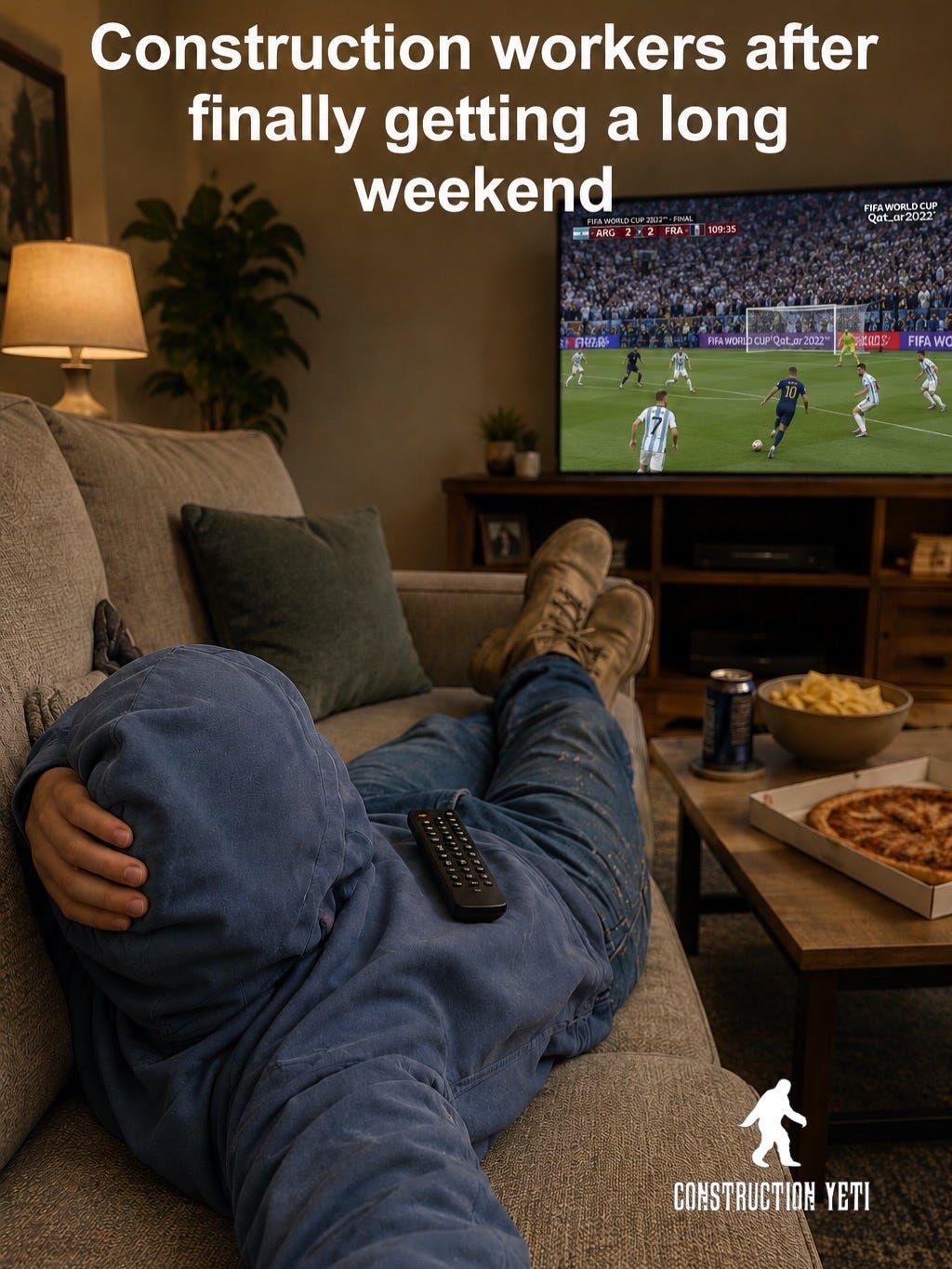
Kick back and relax. (maybe even kick your boots off) You earned it!
Construction Curiosities is a reader-supported Newsletter. Please consider upgrading your subscription to help support the work we are doing. With your support, we can keep providing entertaining yet educational Construction content!
See y’all next time! ✌