
Construction Curiosities #136
It’s Construction. Nobody’s Perfect.

Hey! Happy Tuesday! Matt here.

Welcome back to the Construction Curiosities newsletter!
What a crazy College Football season! Congrats to the Indiana Hoosiers and Coach Cignetti!
“It's all about people. And then you've got to have a blueprint and a plan. And I think there's no question about it, that's what's gotten us to this point.”
-Curt Cignetti
Summary
This week we will look at:
One Musing: Everyone makes mistakes.
ConTech Corner: AI Blueprint
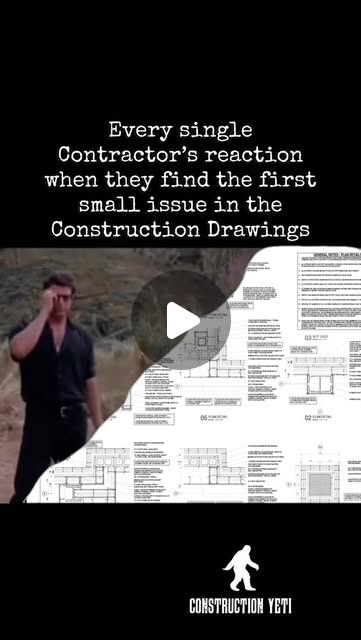
One Meme: Every Single Contractor’s Reaction
It’s Construction. Nobody’s Perfect.
Contractors make mistakes. Engineers make mistakes. Architects make mistakes.
The entire AEC triangle makes mistakes. Nobody’s perfect in construction.
Yet as soon as an issue arises, the jobsite turns into a bad Judge Judy episode and the smack talk starts again.
Architects quietly talk about contractor incompetence at happy hours and inside their studios.
Contractors loudly proclaim the ignorance of architects and engineers on social media and anywhere anyone will listen.
Same industry. Same project. Different group chats.
The uncomfortable truth is this:
We’re all building one-off prototypes.
With incomplete information.
With limited time and fees.
With a hundred handoffs.
And a thousand chances for something to get missed.
Which is exactly why the idea and practice of “Standard of Care” exists for Professional Services.
Not to protect incompetence, but to acknowledge the reality.
Let’s dispel 3 Myths that I see time and time again.
Myth #1: “Standard of Care” Means Architects Should Be Perfect
It doesn’t. It never has.
The concept of Standard of Care comes from common law professional negligence cases going back well over a century. It was developed for doctors, lawyers, engineers, and architects long before modern construction contracts existed.
See case law examples:
The idea is simple:
Professionals are not judged against perfection. Rather they are judged against what a reasonably prudent professional would do under similar circumstances.
Courts figured out early on that if perfection were the standard, no one would practice these professions. Ever.
This principle became formalized in A/E contracts as professional liability insurance became widespread in the mid-20th century.
What the AIA Contract Actually Says
Let’s stop paraphrasing and look at the real words in a real contract.
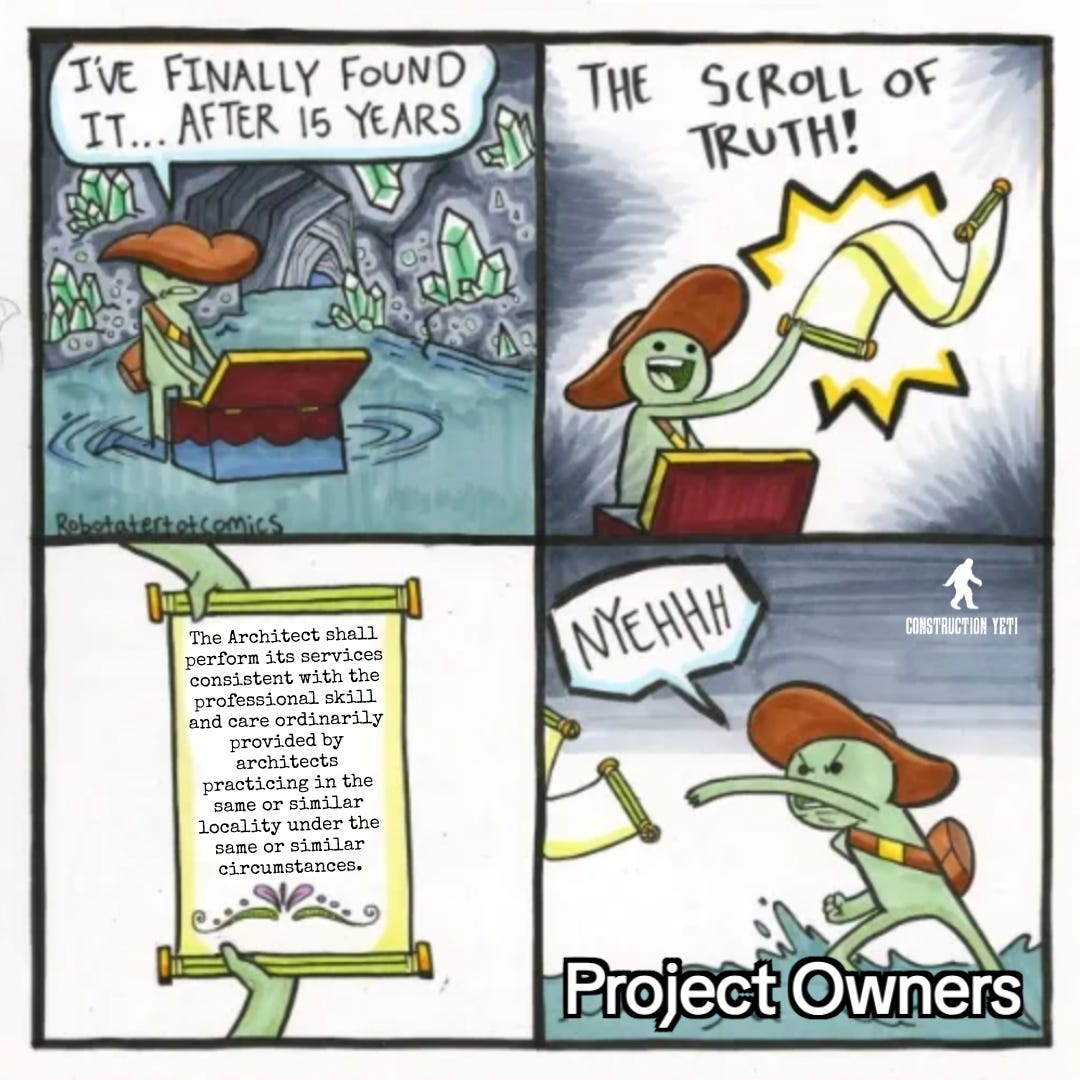
In AIA B101–2017, Section 2.2 states:
“The Architect shall perform its services consistent with the professional skill and care ordinarily provided by architects practicing in the same or similar locality under the same or similar circumstances. The Architect shall perform its services as expeditiously as is consistent with such professional skill and care and the orderly progress of the Project.”
That’s it. That’s the bar.
It’s not flawless. It’s not error-free. It’s not hindsight-proof.
This language is intentional. It mirrors how courts evaluate professional negligence and aligns with how professional liability insurance is underwritten.
If architects agreed to a higher standard, their insurance would either skyrocket or disappear completely.
(PS- I know the AIA is “written by Architects.” Don’t “@” me here. The idea is in line with the Court Decisions in the above Case Law.)
Myth #2: “If There’s a Change Order, Someone Screwed Up”
Sometimes. Not always. And usually not how you think.
A change order can come from:
Incomplete owner decisions during design
Unforeseen site conditions
Scope gaps created by budget constraints
Evolving code interpretations
Constructability issues revealed only after demolition
Coordination conflicts that could not be fully resolved on paper
None of those automatically equal negligence. In fact, the majority of construction change orders do not stem from professional “negligence.”
Most design-related claims that rise to the level of litigation involve:
Life safety failures
Structural inadequacies
Repeated disregard of accepted standards
Clear violations of code or engineering principles
Not a missed dimension. Not a coordination conflict in a congested ceiling. Not a detail that looked reasonable at 50 percent CDs.
Myth #3: “Architects Should Pay for Their Mistakes Out of Pocket”
That’s not how professional services work. Anywhere.
If every design error required personal reimbursement, no one would stamp drawings, no one would touch complex projects, and/or design fees would skyrocket overnight, just to mitigate the risk.
That said, Architects carry Errors & Omissions (E&O) insurance specifically for claims that rise above standard of care failures.
But the moment an Owner alleges professional negligence, the job doesn’t just get tense. It gets legal. Attorneys get involved. Positions harden. And costs start accruing fast for everyone.
Even if the Owner is right, pursuing an E&O claim means paying lawyers long before anyone pays damages. That’s why most Owners don’t treat these claims emotionally. They treat them like what they are: A business decision.
So, since the threshold of negligence must be crossed and then the business decision to pursue a claim must be made, very few projects ever result in a professional liability claim.
They get solved the old-fashioned way: Through negotiations. Through compromises. Or through ruined relationships and hurt reputations…
Why this matters
When teams misunderstand the Standard of Care, 3 bad things happen:
Everything becomes personal - Frustration gets misclassified as fault.
Collaboration shuts down - People protect themselves instead of solving the problem.
Projects slow way down - Because no one wants to move without legal’s guidance.
Construction shouldn’t feel like a courtroom drama. Contracts are written with the understanding that things will be imperfect, coordination will be ongoing, and answers will be discovered along the way. Construction is, quite literally, where drawings meet reality.
The problem usually isn’t that someone made a mistake.
It’s that blame shows up before understanding does.
Yes, sometimes there is real design negligence.
Yes, sometimes contractors miss obvious things.
Yes, sometimes owners change their minds late.
But most of the time, everyone did their job with the information, time, and fee they had available at the moment decisions were made.
To be clear, this isn’t a free pass for the design team to hide behind. It’s not about excuses. It’s about understanding how the system actually works and why it’s set up this way.
Whether you agree with it or not, understanding it helps you prepare.
If you’re an Owner, that means being proactive. Reduce risk where you can. Use third-party constructability reviews. Carry an appropriate contingency. Plan for change orders before they show up.
Because they will show up. Every time. I guarantee it.
From the Community
Here’s some additional comments to think about from this week’s Social Media posts on the topic:
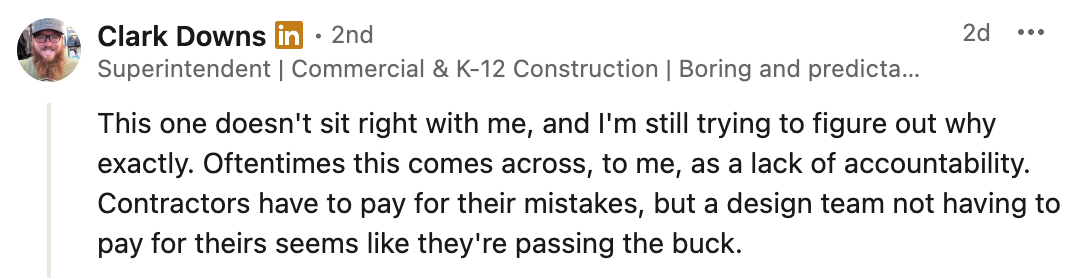



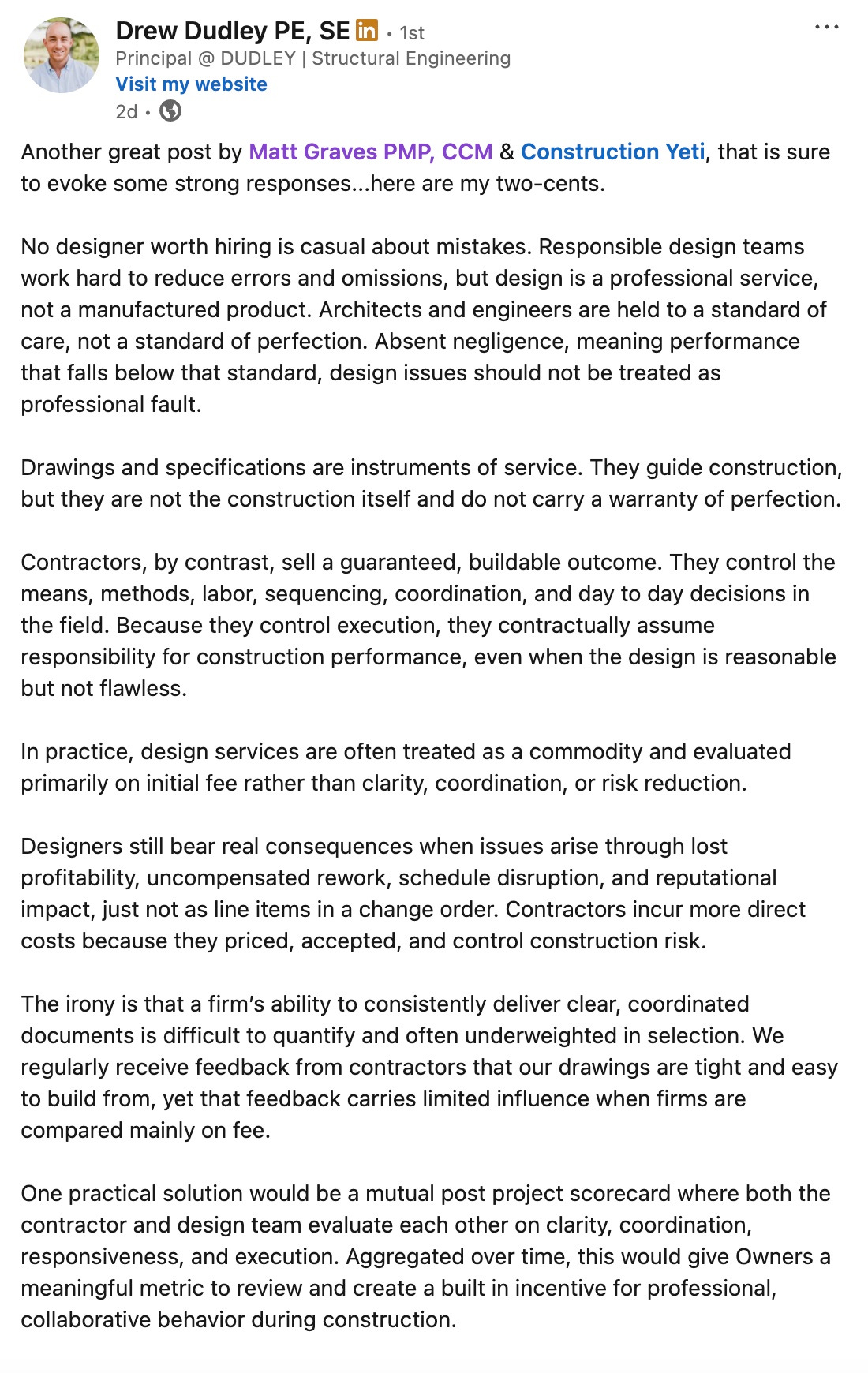
ConTech Corner
This week’s ConTech Corner, isn’t a software tool, but rather a Skool community built by Zach Koerber from Contracts Connected, called the AI Blueprint.
I’ll let Zach, give an intro in his own words:
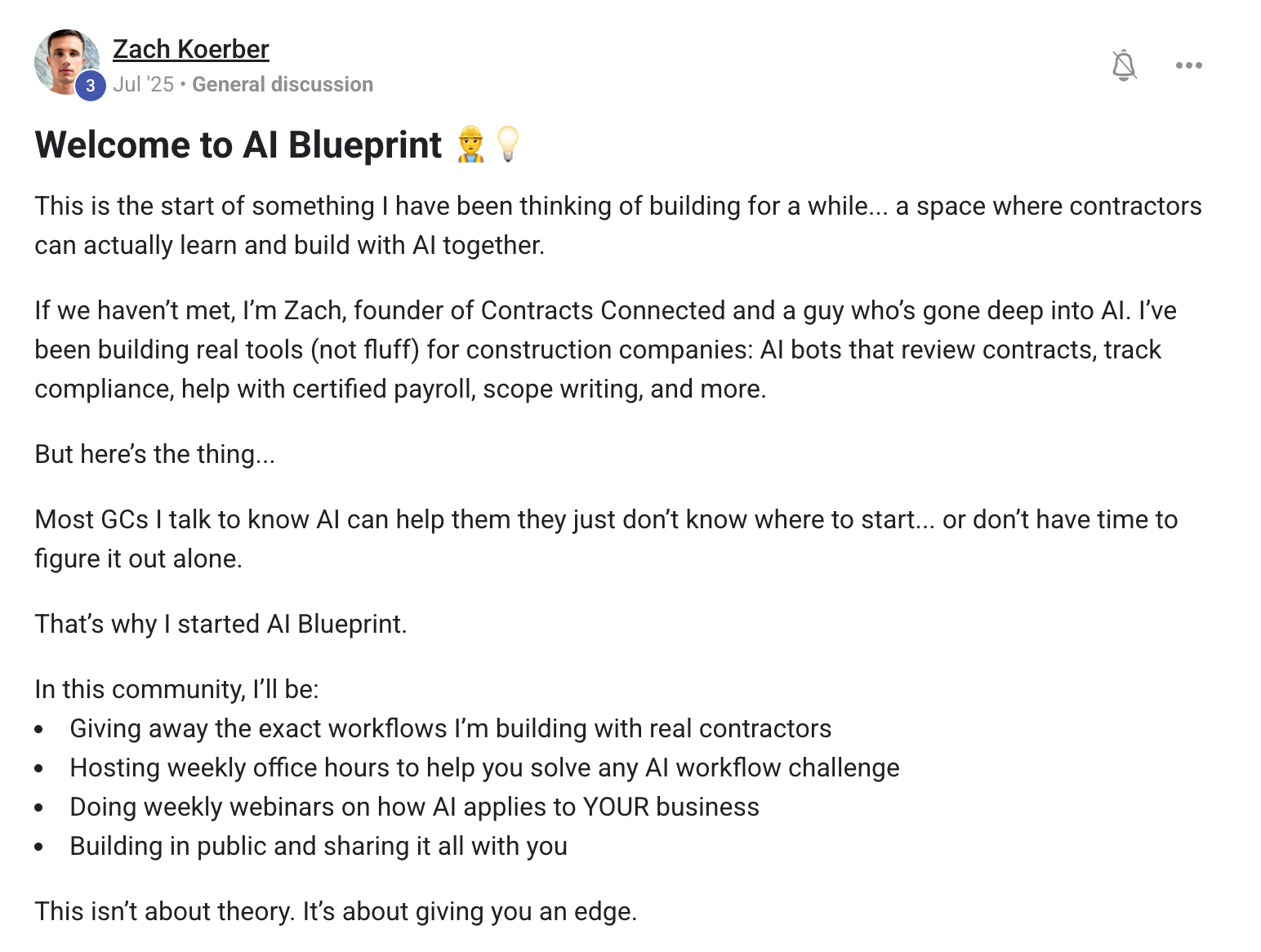
I recently joined and although I haven’t done any of the trainings yet, they look great:



If you want to check it out, Zach gave me a link to share that gives a free 7 Day Trial for the Construction Yeti Audience. Get in there and power through the trainings 😉
PS- Keep your eye on Zach and Contracts Connected team. They have some big annoucements coming. I’m pumped for them!
One Meme
Construction Curiosities is a reader-supported Newsletter. Please consider upgrading your subscription to help support the work we are doing. With your support, we have more big things planned and in the works.
See y’all next week! ✌

Great write up. Thanks
Followed you on instagram for a while, glad I found you on here. I appreciate the thought out writing and stances you take. It’s easy to get caught up in complaining about design, and keeping this in mind is important. Expecting perfection can’t be a standard, and sure won’t help in building relationships with the design team.