
Construction Curiosities #132
A 2025 Reflection: Construction Is Never Going to Get Better

Hey! Happy Sunday! Matt here.
Welcome back to the Construction Curiosities newsletter!
Man, where has the year gone? Everyone always says it…. But the older I get I’m blown away with how fast the years seem to be flying by.
Anyways, before I start a mid-life crisis via newsletter, let’s get into it.
Summary
This week we will look at:
One Musing: Construction will never change
ConTech Corner: Request for Proposals
One Meme: Time to work 80-90 hours
Construction Is Never Going to Get Better
A Year of Looking Back
I get it. That headline is a little clickbaitish. But as we get close to the end of the year, I’ve been doing a fair bit of reflecting. That usually happens when you’ve spent another twelve months bouncing between jobsites, conference rooms, Teams meetings, and Construction Tech demos.
Another year talking with owners, supers, PMs, estimators, architects, and trades.
Another year sitting on Google Meets with construction tech founders who genuinely believe they’ve built something that will *finally* fix this industry.
After all of that, after enough conversations and enough repetition, I keep landing in the same place.
Construction is never going to get better.
That probably sounds strange coming from me. I spend a lot of time talking about innovation, training, technology, and AI. I believe those things matter. I believe they help. I’m not suddenly anti-tech or anti-progress.
This isn’t a hot take. It’s a reflection.
The Patterns You Stop Ignoring
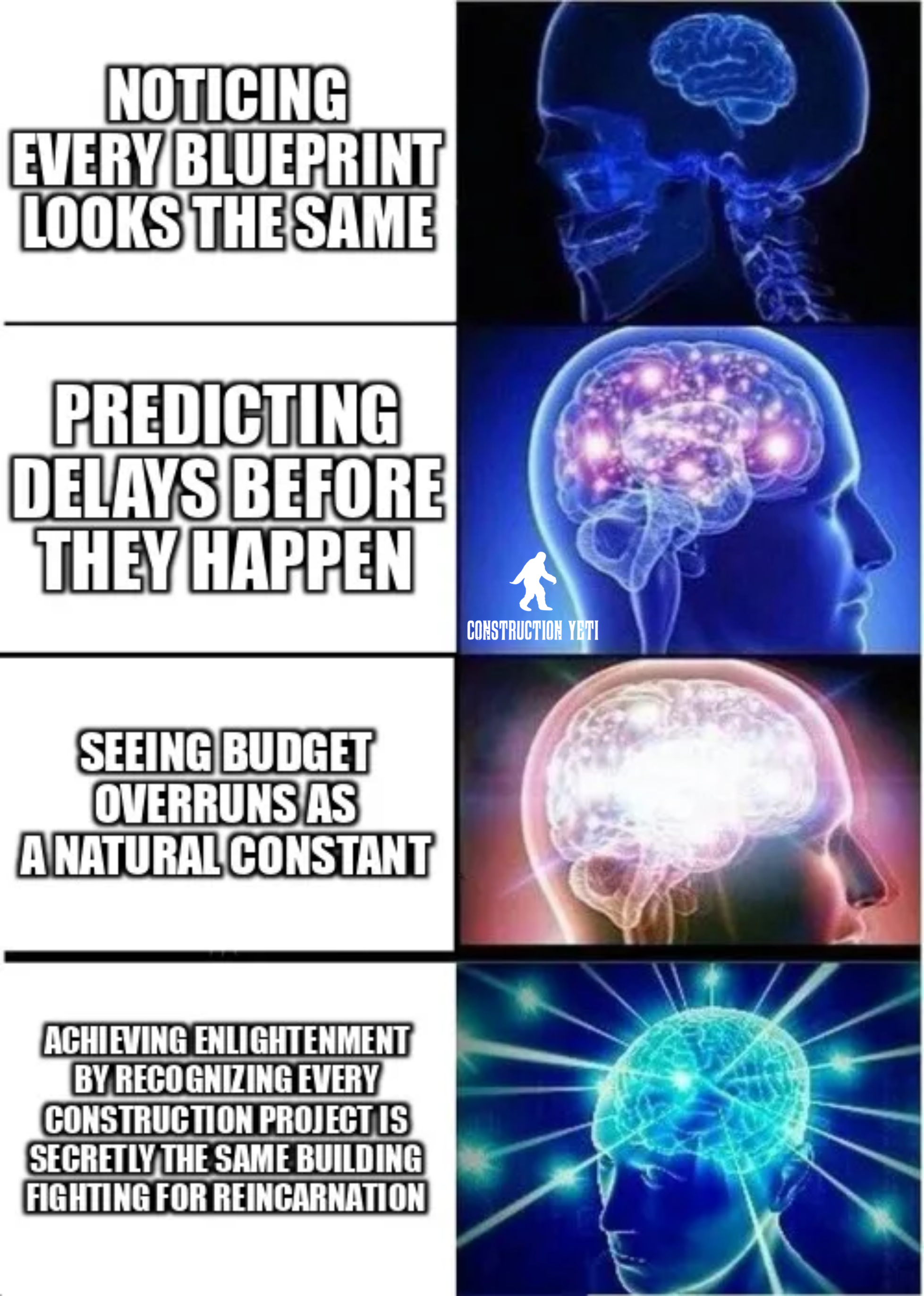
I’m a huge believer in patterns, and what I’ve come to realize is that the fundamental problems of construction are not going away. They don’t disappear. They just reappear under new names, new processes, and new buzzwords. After a while, you stop being surprised by them and start recognizing the patterns.
Construction Projects will always live right on the edge:
Budgets will always be a little too tight.
Schedules will always be a little too aggressive.
Quality will always be a little too optimistic.
Even in more collaborative project deliveries, there’s still a “low bid” squeeze to get everything we can into the budget. Oh, and by the way, you are taking too long.
If there were extra money, extra time, or extra talent, it would have been Value Engineered out long before the project ever broke ground.
If a project had real breathing room, we wouldn’t call it fair. We’d call it fluff or screwing the owner.
Learning the Job While Doing the Job
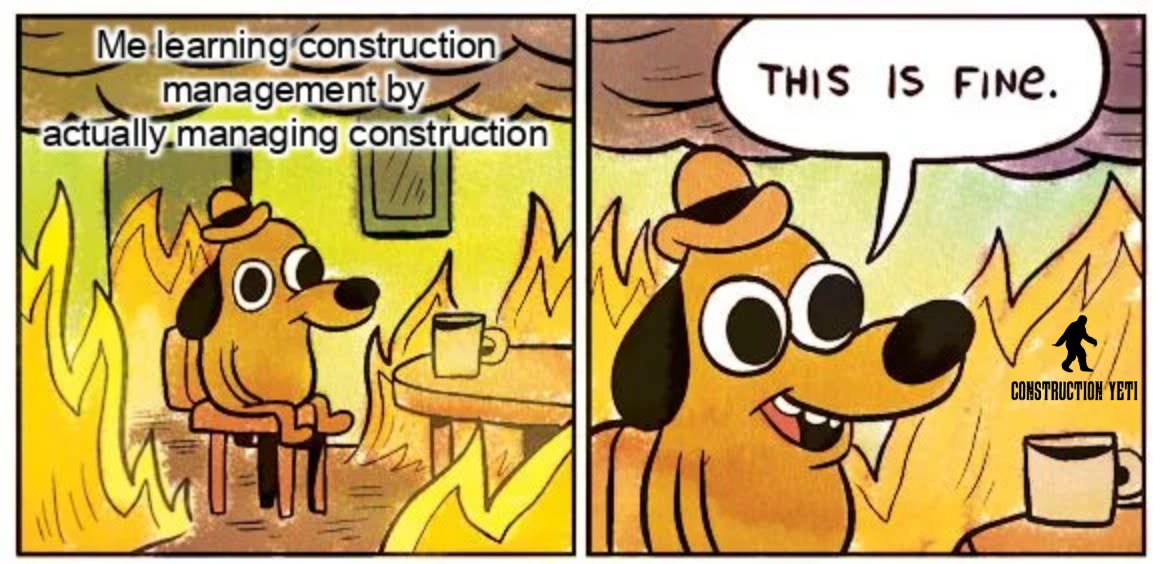
One of the patterns I can’t unsee anymore is that people in construction are almost always learning their role while they’re doing it. Foremen are figuring out how to lead crews while leading them. Superintendents are learning how to manage chaos while standing in the middle of it. Project managers are learning risk management while owning the risk in real time.
There’s actually a name for this in organizational theory. It’s called the Peter Principle. The idea is simple. People get promoted based on how well they perform in their current role, not because they’re prepared for the next one. As a result, they naturally end up operating just beyond their comfort zone and experience level.
That’s not a failure of leadership or intelligence. It’s how hierarchical systems work. And in construction, where the stakes are high and timelines don’t wait, there’s rarely a buffer period to slowly grow into the job. You’re in it immediately. (I know I was)
Most of what we learn in construction isn’t learned ahead of time. It’s learned in the moment. The Experiential Learning Theory, says people primarily learn through experience, reflection, and iteration, not through classroom instruction alone. (That’s my whole career story… figure it out as I go.)
Construction skips straight to learning by experience because it has to. No classroom setting or textbook will prepare you for running a crew that’s behind, managing a frustrated owner, or making a decision with incomplete information. You learn those things while they’re happening, not before.
A Live-Fire Industry
NFL teams don’t just show up on Sunday and figure it out as they go. They practice constantly. Plays. Situations. Scenarios. They train to the point where execution under pressure becomes instinct.
The same is true in the military. Training isn’t something you do once and move on. It’s a massive portion of the job. Repetition, drills, simulations, and feedback, all before anyone is ever dropped into a real conflict. Many in the military spend their whole career "training and practicing.” It’s literally a matter of life and death.
Construction doesn’t work that way.
Even when we do train, it’s rarely enough or done in a manner to simulate the real thing. (sidebar: This needs to change, and if you want to make it happen, let’s chat.)
Most learning happens on the jobsite, in real time, under pressure. It’s closer to taking a soldier, dropping them into a live firefight, and coaching them as it unfolds. Or putting an NFL quarterback on the field without practice and trying to teach fundamental throwing mechanics between drives and at halftime.
That’s not because the industry doesn’t care about training. It’s because construction is inherently live. Every project is a one-off prototype. Every site is different. Every team is different. There is no preseason for a jobsite.
Mistakes are visible. Consequences are immediate. Feedback is not gentle. Construction is a live-fire environment by default.
And once you accept that reality, something important becomes clear. If learning, decision-making, and performance all happen under live conditions, then no tool, platform, or process can ever fully remove the uncertainty or risk. At best, they can help people react faster, see problems sooner, and make slightly better decisions in the moment.
Which is why there is no one big moment coming.
There Is No One Big Moment Coming
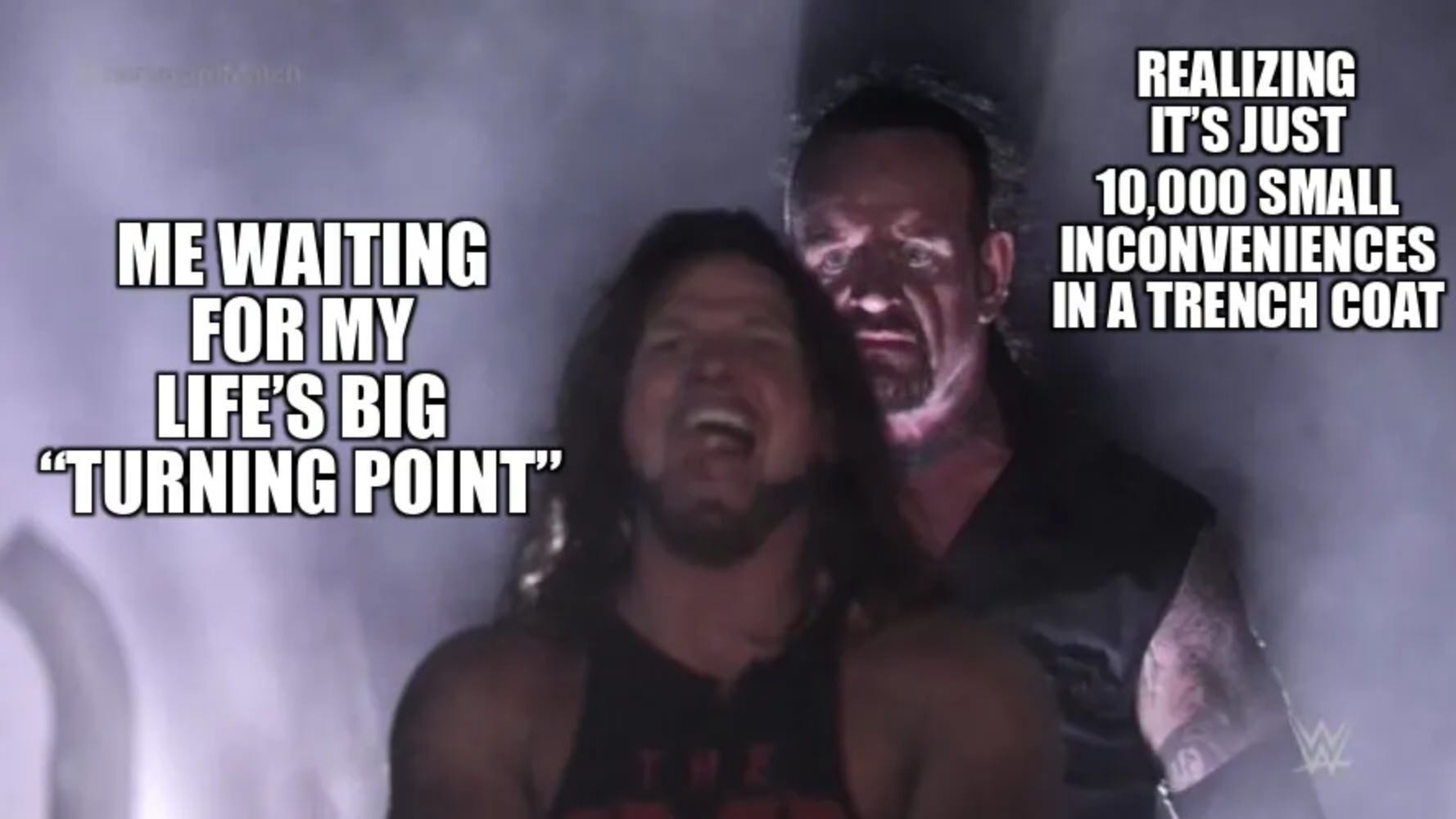
After sitting through enough demos and pilots, another realization has settled in. There is no big moment coming. There is no single tool, platform, or AI model that suddenly makes construction turn a corner. There is no magical tech wand that will make all the problems go away.
That’s not because the tools aren’t impressive. Some of them genuinely are. But construction isn’t one problem waiting to be solved. It’s hundreds of small problems happening at the same time, owned by different people, influenced by different incentives, and constrained by budget, time, & quality.
Technology doesn’t replace judgment or experience. It doesn’t remove pressure or risk. At best, it helps recognize patterns and reduces busy work. It buys time. It gives good people more room to think. More time to plan ahead and be proactive in a traditionally reactive industry.
Quality Is the Output of the System
Once you accept that there is no one big fix coming, another truth becomes easier to understand. Quality in construction is exactly what the system produces. We don’t build buildings as art. We build them for utility.
“Perfect” is attainable. But unaffordable. Perfect takes too long. Perfect doesn’t survive value engineering. What the market aims for instead is good enough to function, pass inspections, get paid, and move on.
Punchlists aren’t a surprise. They’re inevitable. Rework isn’t an anomaly. It’s baked into the process. That’s not because people don’t care. It’s because schedules, budgets, and quality are constantly colliding.
If owners truly wanted Sistine Chapel quality, they should give Sistine Chapel timelines. And no one does.
And then, when you zoom out from a single project world and look at the bigger picture, you see a whole industry of other projects demanding finite resources.
The free market balances on Supply and Demand.
The Game of Inches
So if construction is never going to get better in the big, sweeping way people like to talk about, where does that leave us?
This is the part that actually gives me some optimism. Construction may never improve through one massive breakthrough, but it improves every year through inches. I think about that speech from Any Given Sunday, the game of inches. How winning isn’t about one miracle play. It’s about small margins stacking up over time.
Construction works the same way. One less missed handoff. One clearer conversation. One submittal reviewed a little earlier. One detail that’s actually coordinated. One owner decision made on time instead of late. One painful admin task automated so someone can spend more time thinking and less time spreadsheeting.
None of those things change the industry overnight. But stack enough of them together, and jobs stop bleeding as much. Teams communicate a little better. People burn out a little slower. Problems get caught a little earlier.
We make construction a little more fun.
What I’ve Come to Believe
That’s where technology and training actually fit. Not as revolutions. Not as silver bullets. But as small advantages that compound over time.
Tech that removes soul-crushing admin matters. Training that shortens the learning curve matters. Mentorship that helps people see around corners matters.
They don’t eliminate chaos. They just make it more manageable.
Maybe that’s my real takeaway at this point in time:
Construction will always be messy. Always human. Always imperfect.
The goal isn’t to “fix” it.
The goal is to stack enough small improvements, inch by inch, that the industry continues to evolve into a better place for the Next Generation.
That’s how projects survive thrive. That’s how people grow. And whether we notice it or not, that’s how the industry keeps moving forward.
ConTech Corner
Inches Over Hype
I don’t have something new and shiny to spotlight this week. It’s more of an RFP. If you’ve read this far, you understand more of my innovation mindset.
Construction isn’t waiting on a miracle.
It’s moving forward inch by inch.
And there’s a massive group of people out there who see things in a similar way as me.
Last week, the Construction Yeti Instagram page hit 100,000 followers, which brings the total followers across all platforms to about 175,000. 🤯
This is all something I never imagined. Not even close. When I started this whole thing, it wasn’t a brand play, and I had no textbook content strategy. I was just a construction PM who was tired of dry boring whitepaper content written by marketing people who didn’t know what they were talking about. So I thought, what if we tried keeping things real and laughing at ourselves a little?
Turns out that hypothesis was dead on.
The industry doesn’t want more 90-page PDFs written by people who haven’t been on a jobsite in a decade. The industry wants to feel seen. It wants to laugh at the chaos. And it wants to have the honest conversations we’ve all been avoiding.
The memes opened the door.
The community walked through it.
I can’t tell you how many messages I’ve received saying, “Man, it feels like you are on my jobsite… your memes are so spot on.”
Along the way, I’ve met some incredible construction people. Some legends. Some interesting characters. Folks who’ve built half of America. People who are way smarter and way more accomplished than I’ll ever be. And I’ve personally learned more from this audience than I ever expected.
On the business side, the platform and humor has helped a small handful of brands get their solutions in front of real eyeballs. In a couple of cases, it’s been genuinely game-changing for those startups. That still feels wild to even type.
Which brings me to 2026.
Next year, I’m looking to add 2 or 3 construction tech partners. Not to sell out to whoever cuts the biggest check. I’m interested in companies building genuinely legit tools for the men and women actually doing the work. Tools that make the job suck a little less. Tools that are improving the lives inch by inch.
This isn’t a traditional sponsorship pitch. It’s more of a reverse Request for Proposal.
I’m not interested in one-off logo slaps or shallow influencer posts. I’m not too interested in the “let’s try one small campaign and see what happens.” I want to create long-term partnerships with Brands that believe in what I am doing and with Brands that I love. Solutions that I either use personally, or I would use if they applied to my day job.
If I put the Construction Yeti name behind something, it matters to me.
That means I do my homework. I look past the pitch deck and into how the product actually gets used in the field or the office. If it doesn’t help someone see a problem sooner, communicate more clearly, or get a little time back in their day, it’s not a fit.
From a partnership standpoint, I’m looking for long-term, mutually beneficial relationships. The kind where we can run thoughtful campaigns, tell honest stories, test ideas, and evolve the message over time. Oh, and have fun with it all.
I bring distribution, creative marketing, and an audience that trusts me because I don’t waste their time. In return, I’m looking for partners who understand that real marketing is an investment, not a transaction, and who are willing to experiment instead of playing it safe.
So I’m kinda flipping the script.
If you’re a Construction Tech company and this resonates, I’m less interested in a polished pitch and more interested in your vision. Why you’re building what you’re building. Why you think we’d be a good match. What a real partnership could look like.
And if you’re not a Construction Tech company, just know this. Any brand you see me consistently talk about has earned that spot. I don’t sell out my audience. I care far more about protecting their trust than maximizing short-term revenue.
The industry won’t change overnight.
But if you’re building something that helps it move forward, inch by inch, and you’re just unhinged enough to not be scared of a little meme marketing or having a Yeti in PPE talk about your product… you might be my kind of people.
One Meme
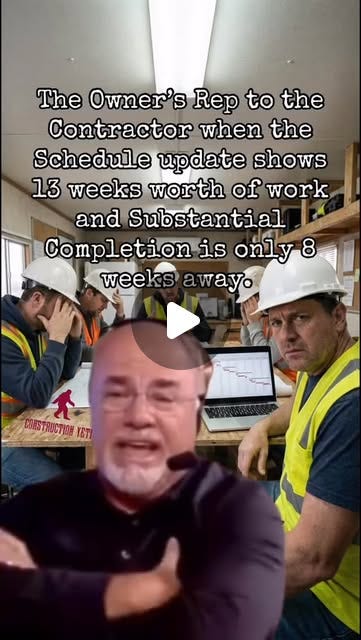
The GC finally unstacked the trades in the schedule update. And there it is: 13 weeks of work with about half that amount of time to get there. People always act surprised when the last 10% of a project turns into a mad dash, but it’s not bad luck or the field losing control. It’s months of overconfident, over-compressed planning finally running out of places to hide.
Some things in construction never really change. You can ignore reality for a while, but the schedule always tells the truth eventually. Over-promise early, pay for it late. Different project, same ending.
Construction Curiosities is a reader-supported Newsletter. Please consider upgrading your subscription to help support the work we are doing. With your support, we have more big things planned and in the works.
For the industry to improve, the culture needs to change, the structure needs to change, and the incentives need to be aligned. Fragmentation, path dependence, and perverse incentives are the three horsemen of the construction apocalypse!
That Peter Principle observation is so spot on it hurts. The live-fire analogy really captures why training never seems to stick in this industry, everyone's trying to learn complex coordination while bullets are flying overhead. I've seen this pattern play out on tons of jobsites where the super is learning to juggle twelve different subs while they're already three weeks behind. The inch by inch framing makes way more sense than waiting for some magic platfrom fix, been part of implementations where everyone thought tech would solve everyhting and it just became another tool people had to figure out under pressure.