
Construction Curiosities #129
Why Construction Teams Find Problems Too Late

Hey! Happy Sunday! Matt here.
Welcome back to the Construction Curiosities newsletter!

After a couple weeks’ absence, I’m back. At work, we are in the process of kicking off a few new projects, in the heat of the Fall Youth Sports Season, and I’m even in talks to get some Construction Yeti Merch on the market! Busy but fun times!
But enough about me… How have you been? Hope all’s well. Let me know.
Anyways, want to hear about Constructability Reviews?
Yes? You’re in luck. Please read on!
No? Too bad. Please read on!
Summary
This week we will look at:
One Musing: The Case for Constructability Reviews
ConTech Corner: Current Sets
One Meme: Actual Footage of Architects
Why Construction Teams Find Problems Too Late

Monday morning.
The crew rolls in, ready to hang ductwork.
Drawings look clean. Schedule’s tight, but we’ve seen worse.
Then someone notices it.
A trunk duct and a structural beam trying to share the same space.
Work stops. Emails fly. RFIs pile up.
The schedule starts bleeding days faster than the GC can say “constructability review.”
And the crazy part?
That entire mess was 100% avoidable.
The Timing Problem Nobody Talks About
Many teams treat constructability reviews like a final exam.
They wait until the design is basically done, then invite the contractor to “look things over.”
Translation: “Hey, confirm how great the plans are, but don’t you dare change anything.”
By that point, it’s too late. The design decisions are baked in. The budget’s locked.
You’re not reviewing for constructability. You’re just praying nothing collides. (And preparing them for the RFI waterfall about to come.)
It’s the same logic as running your first cost estimate at 100% CDs.
Nobody does that. You build a budget estimate early and refine it as you go.
Constructability works the same way.
Bring in the people who actually build things early enough to make a difference.
Where Coordination Actually Falls Apart
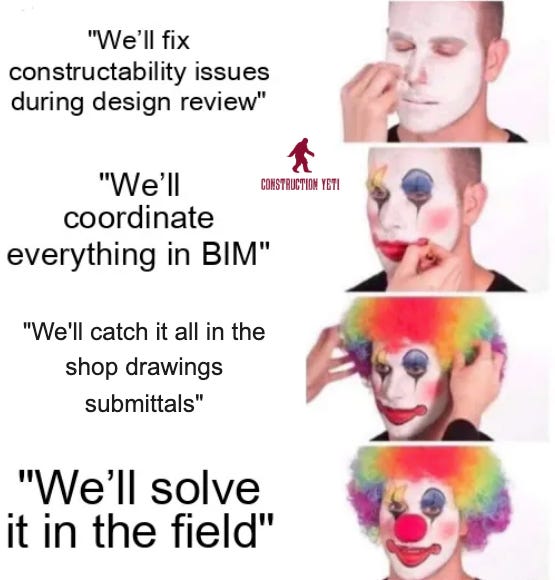
The real breakdowns don’t happen in the big, obvious stuff.
They happen at the seams, where structure meets MEP meets envelope.
Every discipline designs in its own little bubble.
Structural lays out beams for efficiency.
Mechanical routes ductwork on the “logical” path.
Electrical runs conduit that makes sense on paper.
But then nobody remembers to check whether that beam is sitting right in the middle of the riser shaft.
Even on BIM’d projects, stuff slips through the cracks.
Unless coordination is fully integrated (and not just “after the fact”),
you’re still going to find conflicts in the field, just with a digital head start.
And when you do find them, the ripple effect is brutal.
More meetings. More RFIs. More revisions. More delays. More cost.
Early constructability reviews help skip all that chaos.
The Hidden Costs of Late Discovery

When you catch a coordination issue during construction, the visible costs are just the start. Yeah, there’s redesign time and maybe a change order or two.
But the hidden costs are what kill you.
A single coordination miss can snowball into lost productivity across multiple trades.
Change orders start stacking, crews stand down, and everyone fights for schedule recovery.
According to Arcadis’ 2024 Global Construction Disputes Report, North American disputes now average $42.8 million, a 42% jump from the previous year.
Most tie back to coordination and communication failures that started in design.
By the time you’re paying overtime to make up lost time, that “minor field conflict” has turned into a budget black hole.
The Fix Starts Before Design Even Begins
Here’s the truth: good constructability starts with how you build your team.
Most Owners evaluate architects on portfolio, fees, or reputation. But the real differentiator is mindset.
You need a design team that actually wants collaboration, not one that tolerates it.
When I interview architects, I ask them straight up:
“How did collaboration work on your last project?”
If they light up and tell stories about contractor input improving design and solving issues before they become big problems, that’s the one.
If they just nod and use buzzwords like “integrated process,” pass.
Constructability reviews only work when the design team sees them as a benefit, not criticism.
The Page Turn Method
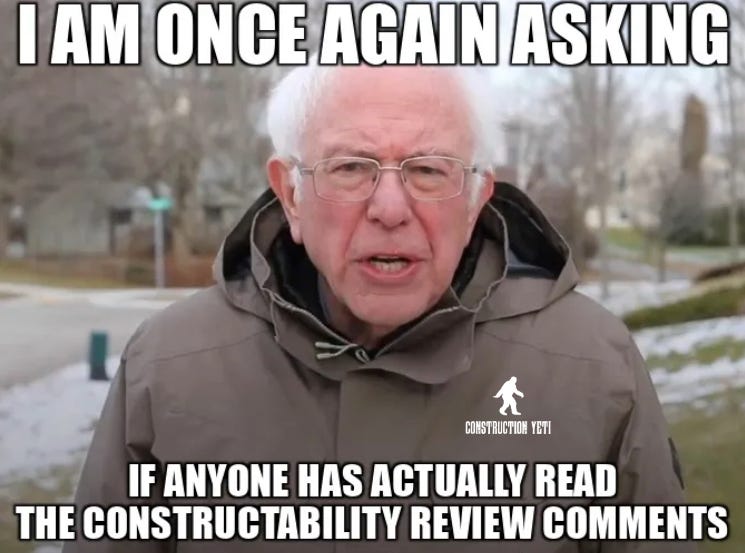
Once you’ve got the right mindset, you still need structure.
Otherwise, your constructability review just becomes another pointless meeting.
Enter the Page Turns.
Each discipline reviews the documents in advance, sheet by sheet.
They come to the meeting with real notes, not vague, typical “be sure to look at” comments.
Then we sit down and go through every sheet and review note together.
Yes, it takes time. No, egos shouldn’t get bruised (if we have the right mentality).
That 8-hour grind saves hundreds of hours later when you’re not chasing field conflicts or following up on unanswered RFIs.
If you’ve ever spent a weekend “field engineering” ductwork around steel that should have been resized 6 months ago, you know exactly what I mean.
Constructability Beyond Coordination
Early reviews aren’t just about ductwork and beams.
They catch sequencing issues, access challenges, material availability problems,
and other things that can derail a project long before you pour concrete.
On phased projects, this is where it becomes mission critical.
You have to bake constructability into the design, not bolt it on afterward.
If I’m doing my job right as an Owner’s Rep, I’m forcing the conversation early:
“What can actually be built on this schedule?”
“What materials can we even get to meet this schedule?”
“What packages need to be released early?”
“Can X trade even access their work area after Y trade is complete?”
That’s how projects stop bleeding time and money.
Measuring the Impact (a.k.a. Proving It Worked)
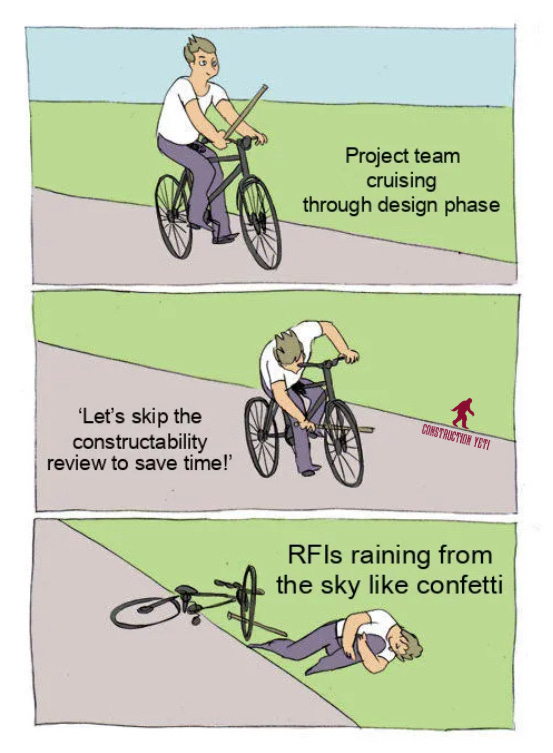
The ROI on early constructability reviews isn’t flashy. It’s quiet.
You’re measuring the problems that didn’t happen.
Here’s how you can track it:
RFI volume: If coordination-related RFIs drop, you’re winning.
Change order type: The fewer coordination changes, the better.
Schedule health: If you’re not burning float or threatening delays by mid-project, that’s your proof.
Document what you catch early.
Estimate what it would have cost if it made it to the field.
That data turns constructability reviews from a “nice-to-have” into a no-brainer.
Why CMAR Fits This Approach So Well
This is exactly why I’m such a fan of the Construction Manager at Risk (CMAR) delivery method.
When it’s done right, CMAR gives the construction team a seat at the table early enough to make a difference.
The contractor isn’t just pricing drawings after the fact. They’re helping shape the design, flag coordination issues, and give real-time cost and schedule feedback while decisions still matter.
That’s where the value comes from.
Not in chasing the lowest bid, but in avoiding the change orders, redesigns, and schedule chaos that come with finding problems too late.
In CMAR, constructability isn’t a box to check. It’s built into the DNA of the process. Preconstruction becomes the proving ground for how well the team communicates, solves problems, and collaborates.
When everyone leans into that role (the architect, the engineers, the contractor, and Owner/ Owner’s Rep) you end up with fewer surprises, fewer claims, and a smoother project all around.
I wrote put together a Delivery Method Breakdown (Stupid Simple Guide) where we look at what CMAR and the other methods are. As well as Pros/ Cons of each as there’s no one-size-fits-all method in selecting a project delivery method.
You can catch that: HERE
ConTech Corner
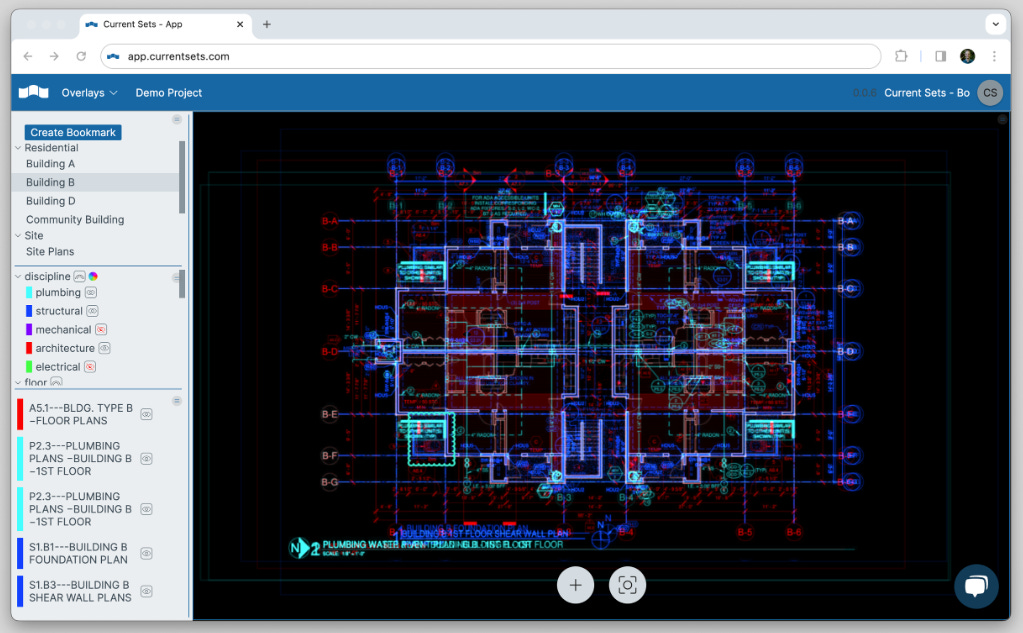
Understand the importance of Constructability Reviews but need some extra help?
Current Sets is a tech-enabled design-review outfit aimed at cleaning up drawings and coordination before you build. Their platform and review services catch issues early: before rework, RFIs, or change orders drag you down.
What they do
They run coordination reviews (high-level early and deep dive later) with hundreds of comments per set.
They do revision reviews. You feed them updated drawings and they highlight what changed, helping you quickly detect discrepancies.
They also offer specialized reviews (i.e. spec books, door & hardware, finishes) and peer reviews for architects wanting extra QA.
Their review pricing is tiered ($4-15k typical) and revision reviews are priced per drawing change ($4-$15 per revised drawing). Current Sets
Why it matters
They have reviewed over $15 billion in project value across 350+ projects to date, and have saved clients tens of millions in avoided rework, change orders, and RFIs.
The promise: better drawing quality early = fewer surprises in construction. That’s a message your subs and architects will hear.
One Meme
It’s not that they are lazy. It’s that they are busy. 😉
Regardless another set of eyes in the Constructability Review Process never hurts.
Construction Curiosities is a reader-supported Newsletter. Please consider upgrading your subscription to help support the work we are doing. With your support, we have more big things planned and in the works.
See y’all next week! ✌

Nice post - funny and complete reality. Thanks